

Navigating the automotive market requires a strategic approach, especially when evaluating a review autobedrijf before spending your hard-earned money. In Dutch, “autobedrijf” translates to a car dealership or automotive business. Whether you are shopping in Northern Europe or analyzing regional sellers, finding a transparent dealership makes the difference between enjoying a reliable ride and inheriting an expensive, hidden money pit.
With thousands of independent garages and franchise networks offering vehicles, consumer feedback provides essential guidance. Studying car dealer reviews helps buyers identify honest sellers, verify mechanical integrity, and protect their budgets. In this detailed guide, we explain how to analyze used car dealer reviews, spot industry red flags, examine warranties, and make confident decisions when buying a used car.
Why Evaluating a Review Autobedrijf Matters
Purchasing a vehicle remains one of the largest financial commitments most consumers make. While pristine showroom floors, polished paintwork, and freshly detailed interiors build initial confidence, evaluating an autobedrijf review reveals what happens after the paperwork is signed and the payment clears.
Conducting thorough due diligence on a dealership provides several practical benefits:
Eliminates Hidden Mechanical Defects: Uncovering recurring consumer feedback regarding undisclosed engine issues, hidden rust, or structural accident repairs.
Protects Your Financial Interests: Spotting dealerships that attach surprise handling, preparation, or delivery fees at the final signing.
Guarantees Honest After-Sales Support: Ensuring the business honors statutory guarantees without forcing customers into lengthy disputes.
Verifies Odometer Truthfulness: Checking that the recorded mileage on the dashboard matches official government registry databases and digital service books.
How to Analyze Car Dealer Reviews Like a Pro
Not all online testimonials carry the same weight. To locate the best car dealerships, you must learn how to filter out fake positive feedback and extract realistic insights from genuine buyer experiences.
1. Look Beyond the Overall Star Rating
A high rating like 4.8 out of 5 stars can easily be misleading if constructed from short, generic praise posts left by accounts with no history. Instead of skimming the overall score, focus on 3-star and 4-star reviews. These mid-tier ratings usually offer nuanced perspectives, detailing smooth purchasing processes alongside minor operational flaws like slow communication or delayed delivery.
2. Identify Patterns in Used Car Dealer Reviews
When evaluating used car dealer reviews, search for recurring thematic complaints across different platforms. A single negative comment regarding a blown headlight bulb may reflect bad luck. However, multiple complaints highlighting failing gearboxes, uncooperative sales managers, or refused refunds point to a systematic operational issue.
3. Observe How Management Handles Complaints
Reputable automotive businesses interact actively with public feedback. Pay attention to how management handles negative customer notes. Trustworthy dealers offer practical remedies, invite the client back to fix the issue, and maintain a polite tone, whereas disreputable sellers issue defensive arguments or ignore complaints entirely.
Comparing Dealership Models: Independent vs. Franchise vs. Online
Choosing where to spend your money depends on your budget, required warranty coverage, and preference for face-to-face negotiation.
| Feature / Criteria | Independent Autobedrijf | Authorized Franchise Dealer | Online Direct Seller |
| Price Structure | Highly competitive, room for negotiation | Higher list prices with fixed corporate overhead | Flat-rate pricing with zero haggling |
| Vehicle Inventory | Multi-brand, varied price brackets | Single-brand focus, recent lease returns | Multi-brand digital catalogs with delivery |
| Warranty Options | Localized guarantees or third-party packages | Certified Pre-Owned (CPO) factory warranties | Short-term money-back return windows |
| Inspection Standards | In-house safety checks or variable quality | Standardized multi-point factory inspections | Third-party digital inspection reports |
| Customer Service | Highly personalized, owner-operated feel | Structured, corporate sales processes | Digital portal support via chat/email |
Red Flags to Avoid When Buying a Used Car
Navigating a dealership lot requires a sharp eye. Keep these critical red flags in mind to protect your wallet when shopping for a vehicle.
Inconsistent Odometer and Service History
Always request official government registry paperwork (such as RDW data in the Netherlands or HPI checks in the UK) to confirm logical mileage progression over time, a verification process the RDW (Rijksdienst voor het Wegverkeer) itself explains in detail for vehicles registered in the Netherlands.
Refusal of Independent Mechanical Inspections
If a dealership refuses to let you take the vehicle to an independent certified mechanic or garage for a pre-purchase inspection, consider it an immediate dealbreaker. Honest dealers welcome third-party inspections because they validate the quality of their stock.
High-Pressure Sales Tactics
Be cautious of salespeople who claim that multiple buyers are rushing to buy the vehicle or who demand non-refundable cash deposits before letting you review the contract terms. Take your time to review every document carefully.
Pre-Warmed Engine Upon Arrival
When arriving for a scheduled test drive, touch the hood or engine bay carefully to see if it is warm. Unscrupulous sellers occasionally pre-warm engines to conceal blue exhaust smoke, severe lifter tick, or rough idle problems that only show during a cold start.
The Complete Step-by-Step Inspection Checklist
When buying a used car, working through a structured physical checklist ensures you do not overlook critical wear points.
Exterior and Bodywork Checks
Panel Alignment: Inspect the gaps between doors, fenders, and the trunk. Uneven gaps often indicate past collision repairs that were corrected poorly.
Paint Uniformity: Look down the sides of the car under clear daylight to spot paint overspray, color mismatches, or wavy body panels.
Tire Tread and Brand: Check that tire tread depth exceeds legal limits (ideally above 3mm) and look for uneven wear, which signals alignment or suspension issues. Premium matching tires usually indicate the previous owner maintained the car properly.
Mechanical and Under-Hood Inspection
Fluid Levels and Quality: Pull the oil dipstick to check for black sludge or milky white deposits, which indicate a blown head gasket. Check coolant reservoirs for rust or oil contamination.
Belt and Hose Integrity: Look for cracking, fraying, or soft spots on engine belts and radiator hoses.
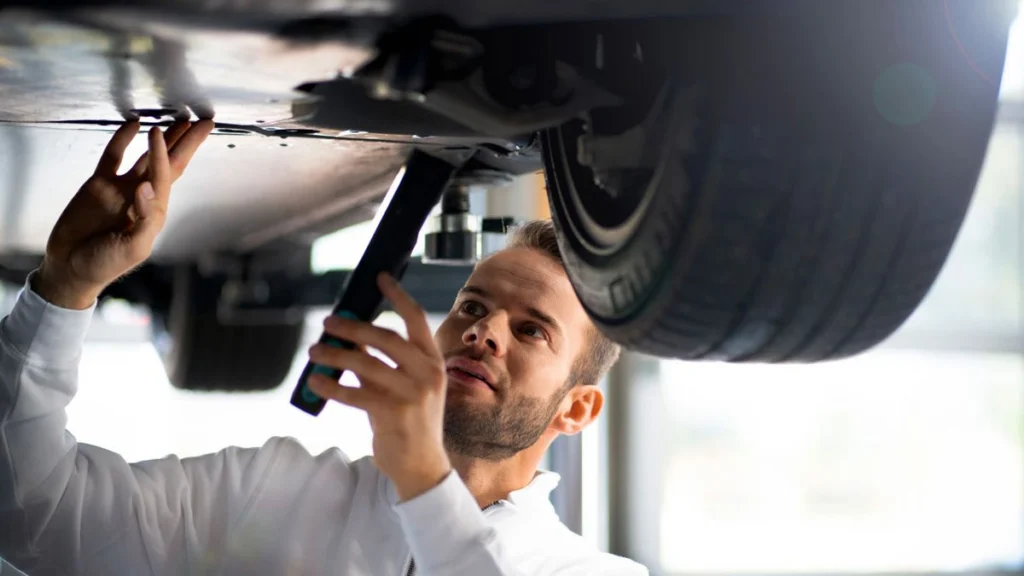
Rust and Underbody Damage: Examine the underside of the frame, exhaust system, and suspension mounting points for structural rust, especially on vehicles driven in winter climates where road salt is used.
Interior and Electrical Verification
Dashboard Warning Lights: Turn the ignition key to position two. Ensure the ABS, airbag, and check engine lights illuminate briefly and turn off once the engine starts.
Climate Control and Electronics: Test the air conditioning, heater, power windows, side mirrors, infotainment screen, parking sensors, and seat adjusters.
Interior Wear vs. Mileage: Compare the wear on the steering wheel, pedals, and driver’s seat bolster against the displayed mileage. Excessive wear on a low-mileage car suggests potential odometer rollback.
Key Questions to Ask the Dealer Before Signing
To protect your rights, always ask the sales representative these essential questions and request written confirmation for their answers:
“Has this vehicle ever been involved in a major structural accident or declared an insurance write-off?”
“Does the listed price include an up-to-date roadworthiness inspection (e.g., MOT or APK) and basic delivery checks?”
“What specific components are covered under the provided warranty, and where can repairs be carried out?”
“Can you provide original service invoices and registration documentation showing the number of previous owners?”
“Are there any outstanding manufacturer safety recalls associated with this VIN?”
Navigating Warranties and Consumer Legal Rights
Understanding warranty structures prevents unexpected out-of-pocket expenses when mechanical issues arise after purchase.
Statutory Legal Protections
In many European countries, consumer laws protect buyers against hidden defects that render a car unfit for normal use. Under standard legal frameworks, sellers are expected to deliver a product that matches its description and functions safely. If a major fault appears shortly after delivery that existed at the time of sale, the dealer is usually legally obliged to repair it.
Dealer Warranties vs. Third-Party Extensions
Many independent garages include 3, 6, or 12-month internal warranties. Read the fine print to see if coverage applies only to internal engine components or extends to electrical systems, turbos, and air conditioning. Be careful with third-party warranty programs that require long claim approval processes or set low maximum payout limits per repair visit.
Conclusion
Finding the right vehicle comes down to selecting a transparent dealership that values long-term customer trust over quick profits. By evaluating every review autobedrijf systematically, analyzing car dealer reviews, conducting careful pre-purchase inspections, and clarifying contract terms, you can approach the market with total confidence and avoid costly surprises. For more vehicle reviews, market analysis, and high-end automotive guides, stay connected with our latest publications on turboocruiser.
Frequently Asked Questions
How can I verify if a review autobedrijf uses real reviews?
Cross-check feedback across multiple independent platforms such as Google Reviews, Trustpilot, and regional automotive forums. Look for reviews with specific details about vehicle models, staff names, and actual purchasing experiences rather than generic praise.
What should I do if a car breaks down right after buying it?
Contact the dealership immediately in writing, stating the exact issue and referencing your sales contract and warranty terms. Avoid bringing the car to an outside workshop for repairs before giving the selling dealer an opportunity to inspect and fix the fault.
Is an RDW or VIN check necessary when buying a used car?
Yes, running a official VIN check provides verifiable information on the car’s registration status, logical odometer progression, past accident declarations, and recall records.
Can I return a used car if I change my mind after purchase?
Unless you purchased the vehicle completely online without visiting the showroom (which may fall under distance selling laws), there is generally no legal right to return a car simply because you changed your mind. Returns are usually allowed only if the dealer breached contract terms or concealed major defects.