
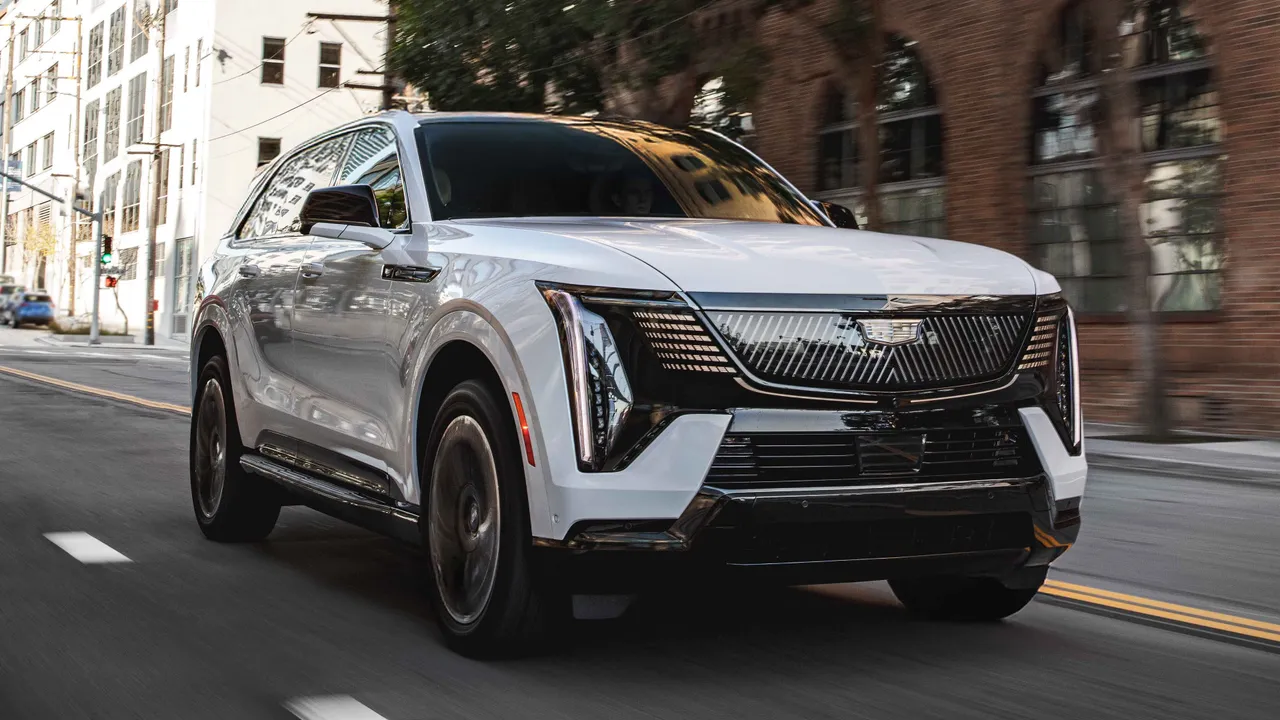
For more than two decades, the Cadillac Escalade has stood as the ultimate symbol of American luxury, structural dominance, and highway presence. It has been the vehicle of choice for executives, celebrities, and large families who refuse to compromise on cabin real estate. However, the automotive landscape is undergoing a massive shift toward electrification. To maintain its crown, General Motors has unleashed its boldest flagship project yet. Meet the electric escalade.
With an escalade iq price that starts right around $127,405 and quickly climbs past $150,000 for top-tier trims, this giant electric vehicle represents a monumental financial investment. It leaves behind the traditional gas-guzzling V8 engine in favor of advanced Ultium battery engineering. Yet, a critical question remains for premium automotive buyers: does this luxury EV truly deliver on its steep price tag, or is it simply a high-priced novelty?
In this comprehensive cadillac escalade iq review, we dive deep into the design language, mechanical specifications, interior refinement, battery charging speeds, and real-world ownership dynamics of this electric behemoth. Ultimately, we will evaluate whether this vehicle deserves a spot in your high-end collection.
Exterior Design: Imposing Presence Meets Aerodynamic Efficiency
The classic Cadillac Escalade has always been known for its boxy, vertical lines and blunt front fascia. While that silhouette looks undeniably authoritative, it presents a massive challenge for electric vehicle range. Wind resistance is the ultimate enemy of a battery pack. Consequently, Cadillac designers had to completely overhaul the SUV’s traditional shape to create the Escalade IQ.
The design team successfully lowered the drag coefficient while preserving the vehicle’s unmistakable street presence. By sweeping the roofline gently toward the rear and incorporating flush-mounted side glass, they created a sleek body that cuts through air currents smoothly.
Key Exterior Design Innovations
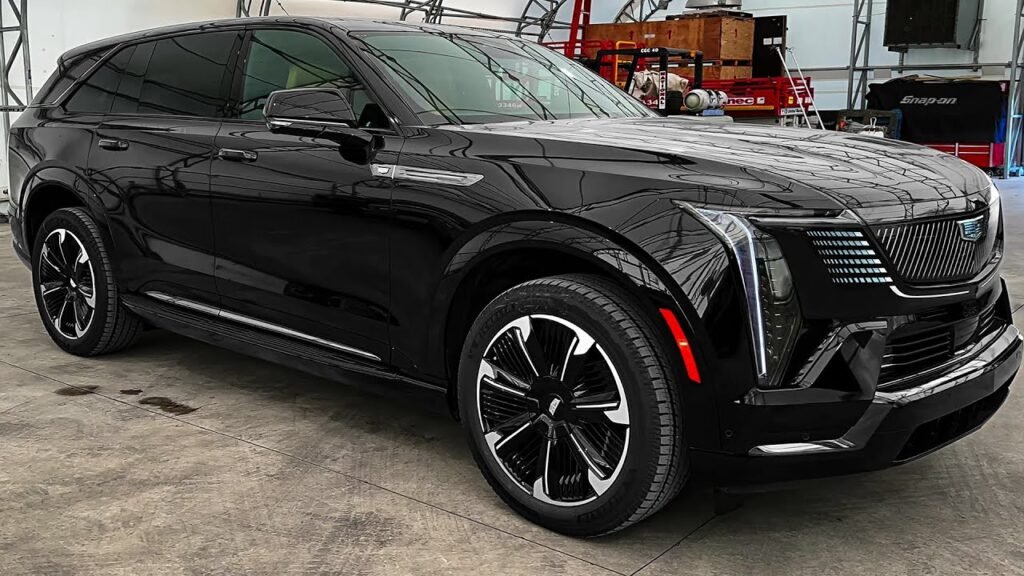
The Digital Shield Front Grille: Traditional mesh grilles are obsolete in the EV world because there is no radiator to feed. Instead, the Escalade IQ features a massive, illuminated Black Crystal Shield front grille. This digital panel handles intricate, choreographed lighting patterns whenever you unlock or approach the vehicle.
Vertical Lighting Elements: To honor the brand’s legacy, the SUV retains dramatic vertical LED headlights and taillights. However, these units are slimmer and sharper, giving the vehicle a decidedly futuristic appearance.
Massive 24-Inch Wheels: To keep the proportions balanced, Cadillac fits premium trims with giant 24-inch alloy wheels wrapped in rugged, low-profile tires. Therefore, the vehicle maintains a highly athletic, planted stance despite its massive height.
The Functional eTrunk: Because there is no internal combustion engine taking up space under the front hood, Cadillac engineered a fully lined front trunk, known as the eTrunk. This lockable compartment offers 12.2 cubic feet of clean storage space, which is perfect for dual flight bags or specialized luggage.
Power and Performance: Unpacking the Escalade IQ Specs
Do not let the vehicle’s massive footprint fool you into thinking it drives like a slow commercial vehicle. The Escalade IQ rides on General Motors’ highly versatile Ultium battery platform, but the mechanical setup is tuned specifically for high-end performance.
Let us take a detailed look at the core escalade iq specs that drive this electric cruiser:
| Performance Metric | Standard Capability | Velocity Max Performance Mode |
| Total Horsepower | 680 Horsepower | 750 Horsepower |
| Peak Torque | 615 lb-ft of Torque | 785 lb-ft of Torque |
| 0 to 60 MPH Sprint | Around 5.2 Seconds | Under 5.0 Seconds |
| Maximum Towing Capacity | 8,000 Pounds | 8,000 Pounds |
To handle this massive power output safely, the vehicle comes standard with an advanced dual-motor all-wheel-drive system. This configuration delivers instant torque to the pavement, allowing the vehicle to accelerate with the urgency of a dedicated sports car.
Advanced Chassis Dynamics
Managing a vehicle that tips the scales at roughly 9,000 pounds requires serious mechanical innovation. Consequently, Cadillac equipped the vehicle with standard Adaptive Air Ride Suspension coupled with Magnetic Ride Control 4.0. This system reads the road surface 1,000 times per second, adjusting the dampers automatically to isolate the cabin from potholes and pavement imperfections.
Additionally, standard Four-Wheel Steering makes navigating tight spaces surprisingly easy. The system enables the rear wheels to turn up to 10 degrees in the opposite direction of the front wheels at low speeds. As a result, the turning circle is reduced to just 39.3 feet, allowing you to guide this vehicle through tight city garages with complete confidence. These kinds of adaptive suspension and steering systems are part of a larger trend covered in this piece on top automotive technology trends in 2026.
Battery Engineering: Escalade IQ Range and Charging Speeds
For the vast majority of premium buyers, the single greatest hesitation surrounding electric vehicles is range anxiety. Nobody wants to spend six figures on a luxury flagship only to end up stranded at a remote charging station. Fortunately, the escalade iq range sets a brand-new standard for the luxury industry.
Thanks to a massive 205-kWh lithium-ion battery pack, the vehicle delivers an impressive, Cadillac-estimated 465 miles of driving range on a full charge. This exceptional range allows you to travel from Los Angeles to Las Vegas, or New York to Boston, without ever having to pause for an energy top-off.
Charging Infrastructure Performance
When you eventually need to replenish the battery pack, the vehicle’s advanced electrical architecture ensures minimal downtime. The Escalade IQ utilizes an integrated 800-volt DC fast-charging system.
Public DC Fast Charging: If you plug the vehicle into a high-output 350-kW public charging station, you can add up to 100 miles of range in just 10 minutes.
Premium Level 2 Home Charging: For residential charging, Premium Luxury and Premium Sport trims feature an upgraded 19.2-kW onboard charger. This hardware enables you to add up to 36 miles of range per hour right in your garage.
Standard Level 2 Home Charging: The base Luxury and Sport trims feature an 11.5-kW onboard charger, which safely replenishes roughly 22 miles of range per hour. For a broader look at how this 800-volt charging architecture compares across the segment, this guide on 800-volt architecture explained covers why it’s becoming the new luxury EV standard.
The Trim Lineup: Choosing Your Configuration
For the 2026 model year, Cadillac has organized the vehicle line into four distinct trim configurations. These options allow buyers to prioritize either a traditional luxury aesthetic or a darker, more athletic design language.
1. Luxury Trim
The Luxury configuration serves as the foundational entry point, but it still feels like a true flagship vehicle. It comes equipped with bright chrome exterior accents, the standard 55-inch display screen, a premium 19-speaker AKG audio system, and 22-inch wheels.
2. Sport Trim
For drivers who prefer an aggressive, performance-oriented aesthetic, the Sport trim swaps out the bright exterior metalwork for an Obsidian Chrome finished front grille and dark exterior accents. It shares the core mechanical features of the Luxury trim but rides on distinct dark-finished wheels.
3. Premium Luxury Trim
This option serves as the ultimate comfort-focused cruiser. It upgrades your home charging hardware to 19.2 kW and introduces power-assisted open-and-close doors. Inside, the front seats feature 16-way power adjustments with built-in back massage rollers. To top it off, a spectacular 38-speaker AKG Studio Reference sound system with Dolby Atmos delivers concert-quality audio.
4. Premium Sport Trim
This top-tier trim combines all the comfort and technological upgrades of the Premium Luxury model with the sinister, blacked-out exterior styling of the Sport trim. It represents the absolute pinnacle of luxury and style in the lineup.
Escalade IQ vs Escalade IQL: The Space Equation
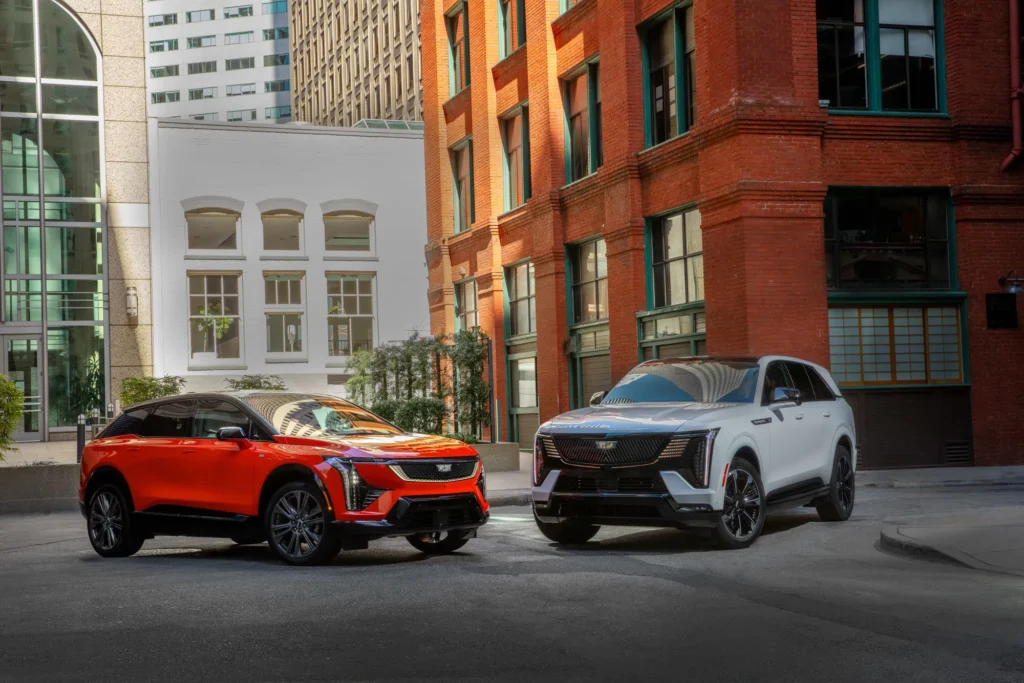
New for this model year, Cadillac has expanded the family by introducing a longer body style variant known as the Escalade IQL. If you regularly haul a large family along with significant amounts of cargo, understanding the difference between these two body formats is essential.
| Dimensional Metric | Standard Escalade IQ | Extended Escalade IQL |
| Total Exterior Length | 224.3 Inches | 228.5 Inches |
| Third-Row Legroom | 32.3 Inches | 36.7 Inches |
| Cargo Space Behind 3rd Row | 23.6 Cubic Feet | 24.2 Cubic Feet |
| Maximum Total Cargo Space | 119.1 Cubic Feet | 125.2 Cubic Feet |
| Maximum Towing Rating | 8,000 Pounds | 7,500 Pounds |
While the standard model offers more than enough room for daily family duty, the extended body style adds an extra 4.2 inches of vehicle length. This design shift drastically improves third-row legroom, ensuring that adult passengers can sit comfortably in the very back during long road trips. However, because of the extra body weight, the IQL’s towing capacity drops slightly to 7,500 pounds.
Interior Refinement: A Tech-Forward Sanctuary
Step past the doors, and the interior reveals a complete departure from traditional automotive design. The entire front dashboard is anchored by a stunning, 55-inch curved LED display screen. Powered by a high-performance Google built-in operating system, this pillar-to-pillar screen handles your driving gauges, maps, media players, and vehicle settings effortlessly.
Meanwhile, a secondary touchscreen controller sits lower on the center console to manage your cabin climate zones and seat configurations.
The Executive Rear Seating Package
For owners who prefer to be chauffeured, the available Executive Second-Row Seating package turns the back cabin into a private mobile office. This upgrade swaps the standard rear bench for individual executive captain’s chairs. These seats feature heating, cooling, and motorized massage functions.
Additionally, the package fits individual 12.6-inch entertainment screens onto the front seatbacks, pairs them with wireless AKG Bluetooth headphones, and installs a dual-wireless smartphone charging pad alongside a stowable tray table.
Strategic Comparison: Escalade IQ vs Rivian R1S
If you are shopping for a premium, three-row electric luxury vehicle, your primary alternative is the critically acclaimed Rivian R1S. Let us see how they compare in the battle of escalade iq vs rivian.
The Structural Differences
The Rivian R1S is designed with an adventurous, outdoor-focused philosophy. It offers outstanding off-road clearance, a rugged interior, and compact exterior dimensions that make it highly maneuverable on rough trails.
In stark contrast, the Cadillac Escalade IQ is engineered for ultimate highway comfort and VIP luxury. It provides a significantly longer wheelbase, smoother ride quality, and far more maximum cargo volume for luggage.
Technology and Cruising Range
When it comes to highway travel, Cadillac holds two major advantages. First, the Escalade IQ delivers an estimated 465 miles of range, outperforming the Rivian’s maximum range by a solid 55 miles. Second, Cadillac includes standard Super Cruise hands-free driver assistance technology along with a 3-year subscription plan. This system allows you to drive hands-free on hundreds of thousands of miles of mapped highways across North America, drastically reducing driver fatigue. For a wider comparison across the entire long-range EV field, this ranking of the longest range EV models in 2026 shows exactly where the Escalade IQ stands against its closest rivals.
Ownership Costs and Tax Considerations
Before signing the paperwork at a local dealership, it is critical to understand the financial landscape of owning a high-end electric vehicle in this price bracket.
Because the vehicle’s retail price sits well above the federal $80,000 threshold established by the IRS, the vehicle does not qualify for the $7,500 federal EV tax credit. Buyers must be prepared to pay the full retail price plus applicable state and luxury taxes.
However, operating costs are significantly lower than a traditional gas-powered model. Refueling a traditional V8 Escalade can easily cost over $100 per tank at the pump. Conversely, charging the electric model at home during off-peak electricity hours costs a fraction of that amount, saving you thousands of dollars in fuel costs over years of ownership.
The Verdict: Is the First-Ever Electric Escalade Worth It?
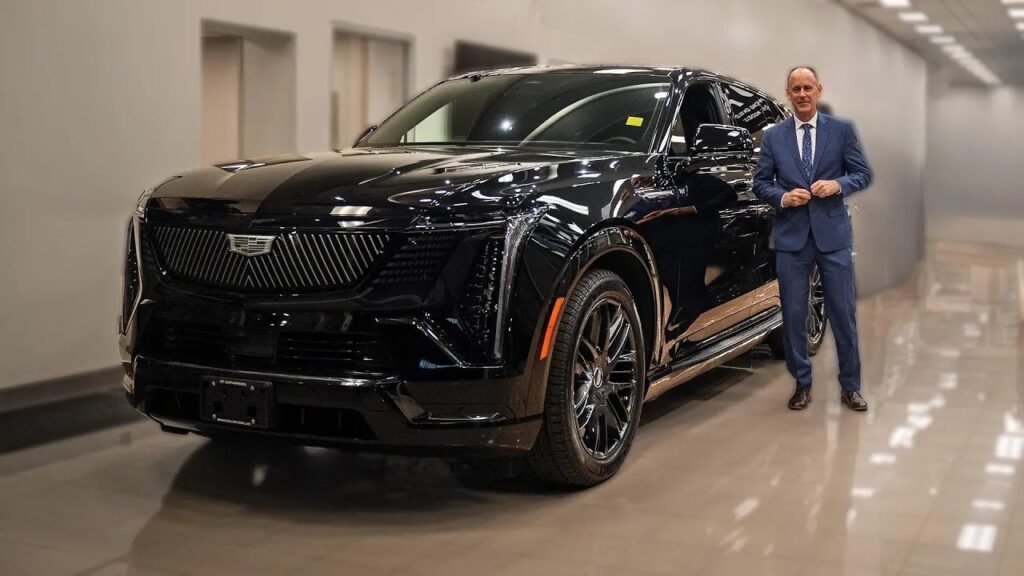
Ultimately, the Cadillac Escalade IQ is a triumphant achievement in automotive engineering. It successfully honors the grand heritage, commanding scale, and uncompromising luxury of the original brand while taking a massive leap into the electric future.
If you are searching for a nimble, budget-friendly commuter vehicle, this giant SUV is clearly not the right fit. However, if you want the absolute pinnacle of American EV craftsmanship, an uncompromised 465-mile driving range, a breathtaking 55-inch dashboard screen, and unmatched street presence, the Escalade IQ easily justifies its premium price tag. It is a true flagship vehicle that redefines full-size electric luxury.
For deeper automotive comparisons, luxury lifestyle guides, and premium vehicle news, be sure to bookmark turboocruiser.
Frequently Asked Questions
What is the exact starting price of the electric Escalade?
The base Luxury 1 trim level officially starts at $127,405. However, as you move up the trim hierarchy toward the Premium Sport models with advanced executive rear seating packages, the final window sticker will easily cross the $150,000 threshold.
Does the Escalade IQ qualify for federal EV tax credits?
Unfortunately, it does not. The Internal Revenue Service (IRS) enforces a strict retail price limit of $80,000 for electric SUVs to qualify for the $7,500 federal clean vehicle tax credit. Because the Escalade IQ significantly exceeds this price cap across its entire lineup, buyers must be prepared to pay full market value without federal subsidies.
Can the Escalade IQ handle heavy-duty trailering and towing?
Yes, it can. Despite carrying an immense 9,000-pound curb weight due to its massive battery pack, the dual-motor powertrain produces enough torque to achieve a maximum towing capacity of 8,000 pounds when properly equipped. This rating allows you to pull recreational boats, horse trailers, or camper units with ease.
What is the primary difference between the Escalade IQ and the Escalade IQL?
The difference comes down to physical space. The extended Escalade IQL features a longer wheelbase that stretches the total exterior length by 4.2 inches. This structural change provides significantly expanded legroom for third-row occupants and maximizes overall rear cargo capacity.