
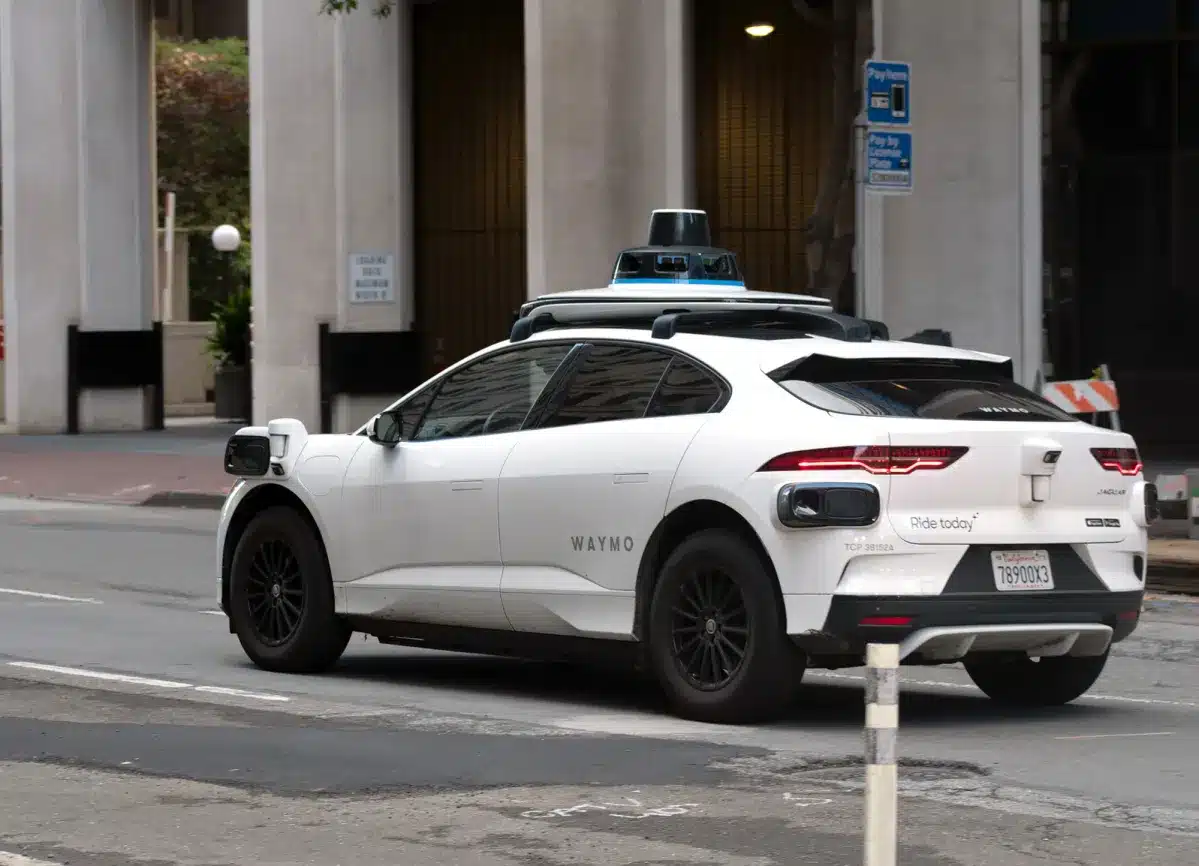
The luxury automotive market has officially crossed a line that separates advanced driver assistance from true machine independence. For years, premium automakers packed their cabins with “hands-free” highway cruise features, but the driver remained fully, legally responsible for monitoring every single inch of the road.
In 2026, the paradigm has shifted. Level 3 autonomy cars are transitioning out of concept showrooms and onto real public roads, completely reshaping how we view long-distance travel and daily commutes. The legal liability is shifting directly from human shoulders to automotive artificial intelligence under highly specific conditions, making the race for autonomy the ultimate flex among legacy and tech-forward automakers alike.
If you are a high-end commuter shopping the premium segment on Turboocruiser, choosing the right system isn’t just about selecting your favorite brand aesthetic. It is about understanding the distinct boundary between a car that helps you drive and a car that drives itself, balancing absolute cutting-edge technology against real-world usability.
Understanding the Autonomy Divide: Level 2 vs. Level 3
To crown a leader in autonomous highway driving luxury cars 2026 performance, we have to unpack the strict classifications established by the Society of Standards Engineers. The industry is divided into two clear, highly contested camps: Level 2 and Level 3.
Systems like General Motors’ Super Cruise and BMW’s Highway Assistant allow you to remove your hands from the steering wheel on pre-mapped expressways. However, Level 3 is true conditional automation. When a Level 3 system is legally engaged, the vehicle assumes total operational control of the steering and braking. You can safely look away from the road to interact with your vehicle’s infotainment menu. If the vehicle gets into an accident while the system is running within its approved boundaries, the automaker, not your personal insurance policy, holds the legal liability.
Level 2 and Level 2+ (Hands-Free, Eyes-On)
Systems like General Motors’ Super Cruise, Ford’s BlueCruise, and BMW’s Highway Assistant allow you to remove your hands from the steering wheel on pre-mapped expressways. However, infrared driver-monitoring cameras track your eyeballs. If you stare at your smartphone, read a book, or glance away from the windshield for more than a few seconds, the car flashes intense visual alerts, pulses the seatbelts, and demands you retake physical steering control immediately. You are always legally liable if something goes wrong.
Level 3 (Hands-Free, Eyes-Off)
This is true conditional automation. When a Level 3 system is legally engaged, the vehicle assumes total operational control of the steering, braking, and situational awareness. You can safely look away from the road, type out work emails on your laptop, watch a movie on the central console, or interact entirely with your vehicle’s infotainment menu. If the vehicle gets into an accident while the system is running within its approved boundaries, the automaker—not your personal insurance policy—holds the legal liability.
The Strategic Pivot: Mercedes-Benz Drive Pilot vs. MB Drive Assist Pro
When evaluating the best self driving highway car for true eyes-off autonomy, Mercedes-Benz made global headlines by being the first manufacturer to secure legal SAE Level 3 certification for a consumer vehicle operating on public roads in parts of the US. However, the reality of deploying these systems has introduced massive regulatory hurdles.
For the freshly updated 2026 model year S-Class and EQS sedan, Mercedes-Benz has executed a fascinating tactical pivot in the North American market. Instead of forcing the highly restricted, low-speed Level 3 Drive Pilot system onto all buyers, they are deploying a brand-new, ultra-advanced Level 2++ framework. This allows for a more seamless luxury driving experience while engineers redirect resources toward a future high-speed Level 3 system capable of running at up to 81 mph.
Why the Pivot Happened
The original Level 3 Drive Pilot was a technical masterpiece, utilizing an incredibly complex hardware array featuring a premium nose-mounted LiDAR (Light Detection and Ranging) sensor, long-range radar, and moisture sensors in the wheel wells to calculate braking distances on wet tarmac.
The massive catch was its highly restricted operational domain: it only functioned in heavy, stop-and-go commuter traffic jams at speeds capped below 40 mph, during daylight hours, and in perfect weather with a lead vehicle to follow.
For 2026, while Mercedes engineers redirect resources toward a future high-speed Level 3 system capable of running at up to 81 mph, the new MB Drive Assist Pro takes center stage. It functions as a high-speed, hands-free Level 2++ system that operates at full highway speeds up to 85 mph. It keeps your eyes on the road but handles steering, lane centering, and adaptive distance pacing with a degree of mechanical smoothness that matches a human chauffeur.
The Open-Road Interstellar Cruiser: GM Super Cruise
If your daily commute or lifestyle involves wide-open, high-speed interstate travel, General Motors’ Super Cruise framework remains an absolute powerhouse in the luxury segment. While technically classified as an SAE Level 2+ system, it offers unparalleled geographic freedom. GM bypassed the philosophy of relying solely on live camera vision by meticulously mapping the continent’s highway infrastructure using precision aerial LiDAR mapping.
Using this data, GM has logged more than 750,000 miles of divided highways. On these designated routes, Super Cruise allows for completely seamless, uninterrupted hands free highway driving at speeds up to 85 mph. The system tracks surrounding traffic flow beautifully, automatically activating the turn signal and executing passes without requiring a single touch from the driver’s hands or feet.
The system tracks surrounding traffic flow beautifully. When it approaches a slow-moving commercial truck, the AI automatically activates the turn signal, checks the blind spots, glides into the left lane to execute a clean pass, and safely slips back into the right lane without requiring a single touch from the driver’s hands or feet.

The Visionary Maverick: Tesla Full Self-Driving (Supervised)
No discussion of autonomous highway driving luxury cars 2026 is complete without highlighting Tesla’s controversial and highly capable Full Self-Driving (FSD) architecture. Tesla approaches autonomous development from a radically different philosophical angle than its German or Detroit rivals, utilizing a pure camera-only approach driven by an incredibly powerful onboard AI neural network.
The core advantage of Tesla’s system is its utter lack of geographic restriction. It reads the physical road in real-time, handling unmapped detours and complex interchanges with impressive flexibility. However, because it remains firmly classified as a Level 2 Supervised system, the driver must remain completely attentive at all times. You can check our Tesla technology deep-dive for more details on how their neural network is evolving.
The Intuitive Executive: BMW Highway Assistant
BMW has established a fiercely loyal following in the premium autonomous space with its Highway Assistant software module. Packaged inside the Active Driving Assistance Professional suite, this system is a masterclass in elegant, frictionless engineering. Operating at full highway speeds up to 85 mph, the system’s standout feature is its revolutionary Active Lane Change with Eye Activation.
When the vehicle catches up to a slower vehicle, the onboard computer calculates an optimal overtaking path. Instead of forcing the driver to manually click a stalk, the car tracks eye movement to validate intent. This makes it a strong contender for the title of the best self driving highway car due to its intuitive human-machine interface. This feature is particularly popular on executive flagships like the all-electric i7.
Comparing the Driving Experience: Which System Fits Your Life?
Choosing the definitive champion of 2026 depends entirely on your specific geographic location and your unique daily driving patterns. If you live in highly populated coastal metropolises and find yourself consistently trapped in brutal, low-speed morning traffic snarl-ups, hunting down level 3 autonomy cars like the Mercedes-Benz equipped with Drive Pilot offers an experience that no other system can match. It provides the legal freedom to completely disengage while the car assumes full liability.
However, if your lifestyle is defined by long-distance interstate road trips and a desire to arrive at your destination completely refreshed, hands free highway driving with GM Super Cruise provides the most robust and confidence-inspiring experience money can buy. It is predictable, high-speed, and covers a vast network of roads.
For the drivers who want a glimpse into a pure AI-driven future that isn’t tethered to highway maps, Tesla’s vision-based system remains an incredibly compelling wildcard. For more expert reviews and comparisons, stay tuned to our automotive innovation guides at Turboocruiser.
Frequently Asked Questions (FAQ)
What happens if an autonomous highway system encounters unexpected construction?
If a hands-free system detects missing lane lines, construction cones, or temporary concrete barriers that it cannot confidently process, it immediately initiates a standard handover sequence. The vehicle emits audible chimes, flashes red lights on the steering wheel rim, and provides a clear countdown window (typically 10 seconds) for the human driver to resume manual control. If the driver fails to grab the wheel—perhaps due to a medical emergency—the vehicle will automatically activate its hazards, bring itself to a safe stop within its lane, lock out the autonomous system, and initiate an emergency call to first responders.
Why do companies like Mercedes-Benz use LiDAR while Tesla completely avoids it?
Mercedes-Benz and General Motors utilize LiDAR because laser scanning creates an incredibly accurate, unblockable 3D depth map of the environment that functions perfectly regardless of blinding sunlight, deep shadows, or pitch-black midnight highway conditions. Tesla avoids LiDAR entirely because they believe that high-resolution optical vision cameras, paired with advanced machine learning neural networks, are fully capable of replicating human visual processing at a significantly lower hardware cost, allowing the vehicle to navigate dynamically without relying on pre-mapped terrain.
Are Level 3 autonomous vehicles legal to use in every state?
No. Autonomous driving laws are highly fragmented. While international frameworks exist, in regions like the United States, deployment is regulated on a state-by-state basis. For example, Mercedes-Benz had to secure explicit regulatory approval from the states of California and Nevada to legally deploy its Level 3 Drive Pilot system. Even if you drive a fully compatible vehicle across state lines into an unapproved territory, the car’s onboard GPS will automatically geofence and disable the Level 3 capabilities until you re-enter a legally approved zone.
Does heavy inclement weather affect autonomous highway driving?
Yes, heavily. Torrential rain, packing snow, and dense ground fog can easily blind the optical camera lenses, coat radar sensors in ice, and completely obscure the physical painted lane markings on the asphalt. When the vehicle’s onboard diagnostic sensors detect that environmental visibility or tire traction has dropped below a safe operational baseline, the system will prevent engagement or safely prompt the driver to take back manual control.
Is there an ongoing fee associated with using these advanced highway features?
Yes. The automotive industry is rapidly transitioning these high-end autonomous systems into software-as-a-service (SaaS) subscription models. While the physical sensors and camera arrays are built into the vehicle at the factory, keeping the high-definition map data fresh, receiving over-the-air AI software updates, and utilizing the high-speed cloud processing networks typically requires a monthly or annual subscription fee after an initial luxury trial period expires.