
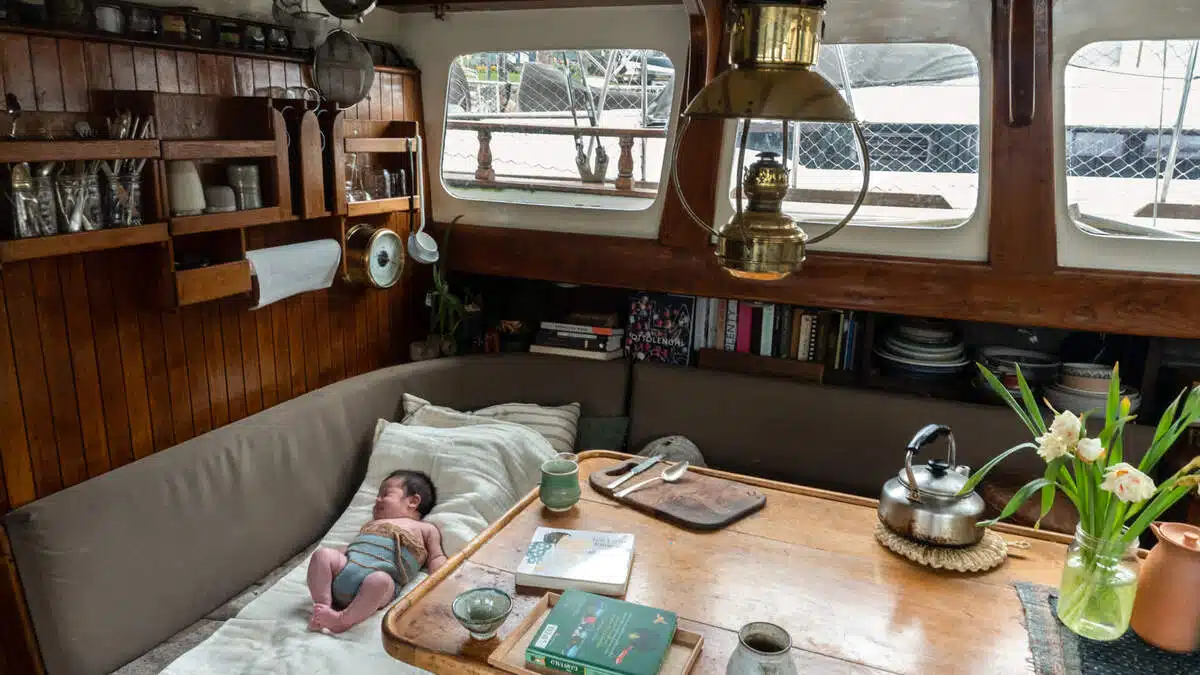
A few years ago, the #VanLife movement dominated social media as Americans traded office cubicles for converted Sprinters, but in 2026, the tide is officially shifting toward the water. As the road becomes increasingly crowded, expensive, and over-regulated, the liveaboard lifestyle has emerged as the premier alternative for those seeking a financially viable escape from skyrocketing urban rents. Living on a boat is no longer just a seafaring fantasy; it is a strategic response to the modern housing crisis, offering digital nomads and minimalists more square footage and a tighter sense of community than a van ever could. But when it comes to boat life vs van life, does the reality of maintaining a vessel actually live up to the dream of offshore freedom?
SECTION 1: Why Living on a Boat is Suddenly Trending in the USA
Google searches for “how to live on a boat” and “liveaboard marinas” have surged as Americans seek an escape from the “Big Three” pressures: skyrocketing rents, urban burnout, and the desire for true location independence.
Key Drivers of the Trend:
The Housing Crisis: In major coastal hubs like Miami, San Diego, or Seattle, a studio apartment can easily top $2,500. A slip fee at a marina is often half that.
The Remote Work Revolution: With Starlink and improved marina Wi-Fi, “office with a sea view” is no longer a metaphor.
Social Media Influence: Viral creators are showing that you don’t need a million-dollar yacht to live comfortably; a well-maintained 35-foot sailboat can be a cozy, modern home.
The Search for Community: While van lifers often struggle with isolation or “stealth parking” in parking lots, the liveaboard lifestyle offers built-in community. Marinas are essentially floating neighborhoods where neighbors actually know each other.
SECTION 2: What Does Living on a Boat Actually Cost?
One of the biggest misconceptions is that living on a boat is only for the wealthy. While you can spend millions, the entry-level boat living cost in the USA is surprisingly accessible compared to a 30-year mortgage.
Upfront Costs
The Purchase: You can find solid, older liveaboard-ready sailboats or trawlers (30–40 feet) for $15,000 to $80,000.
The “Survey”: Never buy a boat without a professional survey (the equivalent of a home inspection), which usually costs $20–$30 per foot.
Outfitting: Budget $5,000–$10,000 for initial safety gear, solar panels, and interior comforts.
Monthly Ongoing Costs
Slip Fees: This is your “rent.” Depending on the glamor of the marina, expect to pay $500 to $2,000 per month. This usually includes water and trash, and sometimes electricity.
Maintenance (The 10% Rule): A good rule of thumb is to set aside 10% of the boat’s value annually for repairs. On a $50,000 boat, that’s about $415 a month.
Insurance & Connectivity: Marine insurance and a mobile/satellite internet plan typically add another $200–$400 to the budget.
The Verdict: Even with maintenance, a liveaboard’s monthly “nut” is often 30% to 50% lower than the total cost of living in a traditional US city apartment.
SECTION 3: Boat Life vs Van Life — The Honest Comparison
Is Van Life Actually Dead?
Van life isn’t dead, but it has reached a “fatigue” point. Between 2016 and 2022, the market became oversaturated. Many popular spots now have “No Overnight Parking” signs, and the cost of a high-end van conversion has ballooned to over $100,000.

Head-to-Head:
| Feature | Van Life | Boat Life |
| Mobility | Anywhere with a road. | Coastlines, islands, and rivers. |
| Space | Usually 60–80 sq. ft. | 200–400 sq. ft. (plus a deck!) |
| Privacy | High (if you find a remote spot). | Medium (marinas are close-quarters). |
| Legal | Often gray-area “stealth” parking. | Designated “liveaboard” slips are legal. |
| Learning Curve | Driving a large vehicle. | Navigation, weather, and plumbing. |
While van life offers the ultimate land-based freedom, the liveaboard lifestyle provides more “home-like” comfort, including standing headroom, a real galley (kitchen), and a bathroom (the “head”) that doesn’t involve a folding chair.
SECTION 4: The Real Liveaboard Lifestyle — What Nobody Shows You
The Good
There is nothing like waking up to the sound of water lapping against the hull. You are directly connected to the environment; you know exactly when the tide turns and where the wind is coming from. The community is tight-knit—if your bilge pump fails at 2 AM, your neighbor will likely be there with a spare.
The Hard Truths
Boats are complex machines in a corrosive environment. Maintenance is relentless. If you aren’t handy, you will become handy—or you will go broke hiring divers and mechanics. You also have to deal with “pump-outs” (emptying your waste tank) and the reality that a storm can make your “house” very bouncy. Furthermore, not every marina allows liveaboards; you have to do your research to find “legal” slips, especially in states like Florida and California where waitlists are long.
SECTION 5: How to Get Started with Living on a Boat in the USA
Define Your Mission: Are you staying in a marina to save money, or do you want to sail to the Bahamas? This dictates the boat you need.
Education: Take a basic keelboat or powerboat course (ASA or US Sailing).
The Vessel Search: Look for “production boats” (Catalina, Hunter, Beneteau) for easier parts and resale, or “trawlers” (Grand Banks) if you want a floating condo.
The Trial: Rent a boat on a peer-to-peer site for a week. See if you can handle the “small space” reality before selling your furniture.
Location Research: States like North Carolina, Maryland, and parts of the Gulf Coast offer a lower boat living cost and more liveaboard-friendly regulations than Southern California or NYC.
Conclusion
Living on a boat is trending because it solves the most pressing problems of 2026: it bypasses the predatory rental market and replaces the “hustle” with a slower, more intentional pace. Van life isn’t going anywhere, but for those who want more space, a real community, and the ability to travel to international islands, the liveaboard lifestyle is the clear winner.
The best alternative lifestyle isn’t the one that looks best on Instagram—it’s the one that lets you live within your means while waking up happy. Are you considering the jump to the water? Drop your questions in the comments or visit turboocruiser.com to grab our free boat living cost calculator.
FAQS
FAQ 1: Is living on a boat cheaper than renting an apartment in the USA?
Yes, in many cases. While boat maintenance is higher than apartment upkeep, the lack of property tax and lower “monthly rent” (slip fees) often results in a $1,000–$1,500 monthly saving in high-cost coastal areas.
FAQ 2: What is the liveaboard lifestyle really like day to day?
It’s a mix of high-end views and blue-collar work. You’ll spend more time managing your “house systems” (batteries, water, waste) than you would on land, but you gain a sense of self-sufficiency and a much deeper connection to nature.
FAQ 3: How does boat life vs van life compare for remote workers?
Boat life usually offers more desk space and better access to shore power (110v outlets), making it easier for those with heavy tech setups. However, vans are better for those who need to stay in landlocked tech hubs.
FAQ 4: Do you need a license to live on a boat in the USA?
You don’t need a “license” to live aboard, but most states require a basic Boating Safety Education Card to operate the vessel. Insurance companies will also often require a “check-out” or proof of experience before they cover a large liveaboard.
FAQ 5: What type of boat is best for living on full time?
Sailboats (35–45ft) are the most popular for their balance of cost and seaworthiness. Trawlers are excellent if you want more interior “living room” space and don’t plan on sailing long distances.