
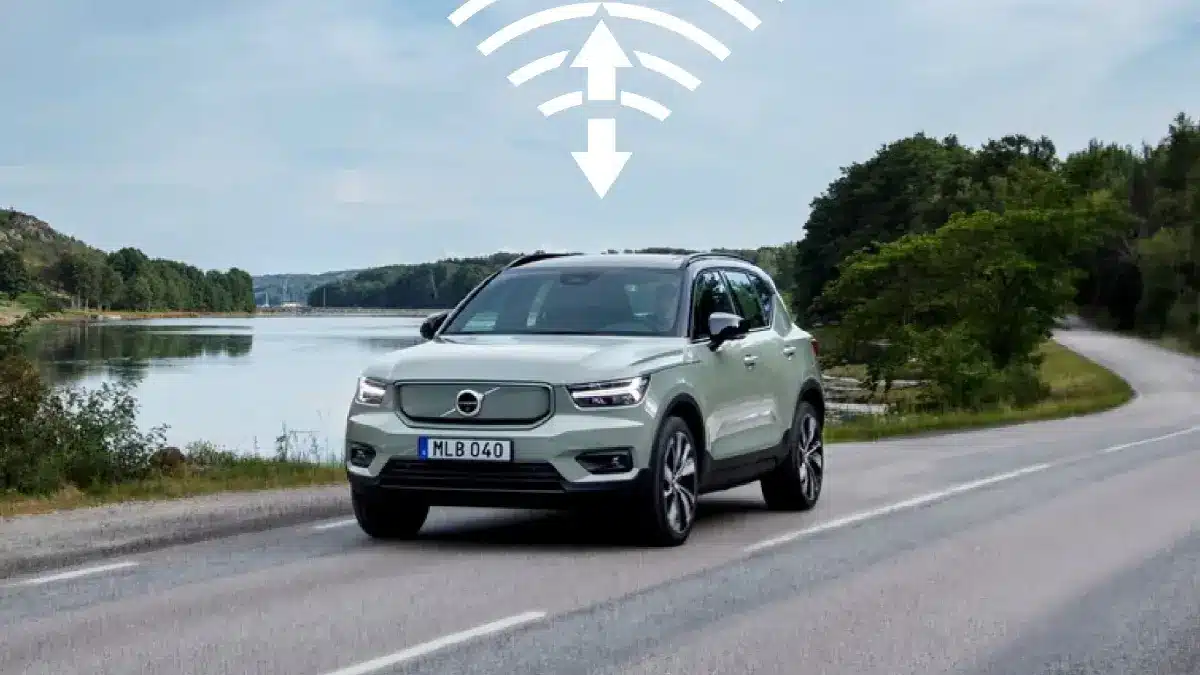
Car OTA (over-the-air) updates allow vehicles to receive software improvements wirelessly, enhancing performance, features, and security without requiring a dealership visit. Leading automakers like Tesla, Ford, and BMW are using this technology to turn cars into evolving, software-defined machines. While OTA updates offer major benefits like convenience and continuous improvement, they also introduce challenges such as cybersecurity risks and subscription-based features.
Imagine waking up one morning to find your car drives better than it did the night before — without visiting a single dealership. No mechanic, no appointment, no waiting room coffee. That’s exactly what car OTA updates make possible. OTA stands for “over the air,” and it refers to software updates delivered directly to your vehicle through a wireless internet connection, just like your phone updates itself overnight. This technology is already reshaping how cars are built, sold, and experienced — and it’s moving faster than most drivers realize. Here’s everything you need to know.
What Are Car OTA Updates and How Do They Work?
A car OTA update (over the air update) is a software package sent wirelessly to a vehicle’s onboard computer system. The car connects to the internet — usually via a built-in cellular connection or Wi-Fi — downloads the update, installs it, and reboots the relevant systems. In most cases, the driver doesn’t need to do anything at all.
Think of it like your smartphone receiving a new iOS or Android update overnight. You wake up, and things work slightly differently — maybe better performance, a new feature, or a fixed bug. Over the air updates for cars work on the same basic principle, just applied to a machine that moves at 70 miles per hour.
The update can target almost any software-controlled system in the vehicle: the infotainment display, battery management system, autopilot or driver assist features, navigation software, charging behavior, or even how the engine responds to the accelerator.
Which Cars Currently Use OTA Updates?
This technology isn’t science fiction — it’s already on roads worldwide. Here are the brands leading the way:
Tesla — The Pioneer
Tesla built its entire vehicle architecture around car OTA updates from the very beginning. Every Tesla model receives regular updates that can add new features, improve battery range estimates, enhance Autopilot capabilities, and fix software issues — all without the owner ever visiting a service center.
One of Tesla’s most notable OTA moments came when they remotely extended the battery range of vehicles in Florida ahead of a hurricane — giving owners more driving capacity to evacuate. That’s the real-world power of this technology.
Ford
Ford’s electric vehicles, particularly the Mustang Mach-E and F-150 Lightning, now receive over the air updates that can improve charging speed, update the SYNC infotainment system, and even adjust driving dynamics. Ford has been expanding its OTA infrastructure rapidly as part of its broader EV strategy.
General Motors (GM)
GM’s Ultifi software platform is designed to support continuous OTA delivery across its vehicle lineup. Cadillac, Chevrolet, and GMC models are increasingly capable of receiving updates that improve performance and add subscription-based features post-purchase.
BMW, Mercedes, and Volkswagen
European automakers have entered the OTA space aggressively. BMW’s iDrive system, Mercedes-Benz’s MBUX platform, and Volkswagen’s ID. series all support over the air updates for cars, covering everything from navigation improvements to driver assistance calibration.
Rivian and Lucid Motors
Both EV newcomers built OTA capability into their vehicles from launch, viewing software updates as an ongoing part of the ownership experience rather than an occasional patch.
What Can OTA Updates Actually Change in Your Car?
This is where things get genuinely interesting. The range of what car OTA updates can modify is broader than most people expect:
Software and infotainment: Map updates, app integrations, interface redesigns, new entertainment features, and bug fixes to touchscreens and displays.
Battery and range management: For electric vehicles, updates can optimize how the battery charges, discharges, and manages heat — directly affecting range and longevity. Some Tesla owners have reported measurable range improvements after OTA updates, based on community data and Tesla release notes.
Driver assistance systems: Autopilot, lane-keeping, automatic emergency braking sensitivity, and cruise control behavior can all be adjusted remotely. This is significant — it means smart cars technology can become genuinely smarter over time without a hardware change.
Performance tuning: Some manufacturers now offer performance unlocks via OTA — meaning a car you buy today could have more horsepower or faster acceleration available through a software purchase. BMW famously (and controversially) tested this model for heated seat subscriptions, illustrating both the potential and the debate around it.
Security patches: Just like computers, connected cars are vulnerable to cybersecurity threats. OTA updates allow manufacturers to push security patches immediately rather than waiting for owners to schedule service visits.
The Real Benefits of Over the Air Updates for Car Owners
Your Car Gets Better Over Time
Traditional cars depreciate in capability the moment they leave the factory. Software-defined vehicles with OTA capability can actually improve — gaining features and performance that didn’t exist when the car was purchased.
This fundamentally changes the ownership experience. Rather than feeling like you’re falling behind newer models, your car evolves alongside the technology.
Fewer Dealer Visits for Software Issues
Estimated based on industry data, a significant portion of recall and warranty visits to dealerships involve software-related fixes rather than mechanical problems. OTA updates can resolve many of these issues remotely, saving owners time and reducing strain on dealer service departments.
Faster Safety Improvements
When a manufacturer identifies a safety-related software issue, an OTA update can reach every affected vehicle simultaneously — in hours or days rather than months. The traditional recall process, which requires mailing notices and scheduling appointments, can take a year or more to reach full compliance.
Real Cost Savings
Fewer service visits mean lower ownership costs. For fleet operators and businesses running connected vehicles, the time and logistics savings from OTA maintenance are substantial.
The Concerns and Challenges Around Car OTA Updates
No technology this significant arrives without legitimate concerns. Here are the honest downsides:
What If an Update Causes Problems?
Software bugs happen. An update that introduces a new issue could affect driving behavior, and unlike a phone bug, a car software problem has safety implications. Manufacturers have internal testing protocols, but no update process is entirely risk-free.
Cybersecurity Risks
Connected cars are, by definition, connected to the internet. That creates attack surfaces. A malicious actor who could intercept or spoof an OTA update would have access to vehicle systems. The automotive industry is working actively on encryption and authentication standards, but this remains an evolving challenge.
Feature Removal and Subscription Creep
Several manufacturers have used OTA updates not to add features but to remove them, or to lock features behind monthly subscriptions. This has created genuine frustration among owners who feel features they paid for can be altered after purchase. Regulatory conversations around this practice are ongoing in multiple countries.

Connectivity Requirements
OTA updates require internet connectivity. In rural areas or regions with limited cellular coverage, updates may be delayed or unavailable. Owners without consistent connectivity may find themselves running older software versions for longer periods.
The Bigger Picture — How OTA Is Redefining What a Car Is
The deeper shift here is philosophical. A car used to be a physical product — you bought it, it was fixed, and it slowly aged. Smart cars technology and OTA capability are turning vehicles into software platforms.
The car you buy is increasingly just the starting point. What it becomes over the following years depends on how actively the manufacturer continues developing its software — and how committed they are to the vehicles already on the road.
This is why connected cars are attracting so much investment and attention. The ongoing software relationship between manufacturer and customer creates a recurring revenue model, continuous improvement opportunities, and a fundamentally different kind of brand loyalty.
For drivers, the practical implication is clear: when buying a new vehicle today, OTA capability should be on your checklist alongside range, safety ratings, and cargo space. It’s that consequential.
Conclusion
Car OTA updates are not a gimmick or a distant promise — they are actively reshaping what vehicles are capable of, how manufacturers maintain them, and what ownership means. From Tesla’s groundbreaking implementation to the rapid adoption by Ford, GM, BMW, and beyond, over the air updates for cars have moved from cutting edge to expected feature in just a few years.
The cars being built today are software-defined machines that will evolve throughout their lifetimes. Understanding smart cars technology and how connected cars work isn’t just for tech enthusiasts — it’s essential knowledge for any driver making a vehicle purchase in 2025 and beyond.
For more in-depth coverage of automotive technology, EV trends, and smart driving innovations, visit turboocruiser.com — where we keep you ahead of everything moving on four wheels.
Frequently Asked Questions (FAQs)
Q: What is a car OTA update?
A: A car OTA (over the air) update is a software update delivered wirelessly to a vehicle’s computer systems via cellular or Wi-Fi connection — similar to how smartphones receive updates, requiring no dealership visit.
Q: Which cars receive over the air up
dates?
A: Tesla, Ford (Mach-E, F-150 Lightning), General Motors (via Ultifi platform), BMW, Mercedes-Benz, Volkswagen ID. series, Rivian, and Lucid Motors all currently support OTA updates to varying degrees.
Q: Are car OTA updates safe?
A: Manufacturers apply testing protocols before releasing updates, but like any software process, rare issues can occur. Major automakers use encrypted, authenticated delivery systems to minimize cybersecurity risks.
Q: Can OTA updates improve my car’s performance?
A: Yes. OTA updates can improve battery range, driving dynamics, driver assistance performance, and in some cases unlock additional vehicle capabilities — depending on the manufacturer and model.
Q: Do OTA updates cost money?
A: Most OTA updates are free software improvements or bug fixes. However, some manufacturers have introduced subscription-based feature unlocks delivered via OTA, which has sparked debate about what buyers own after purchase.