
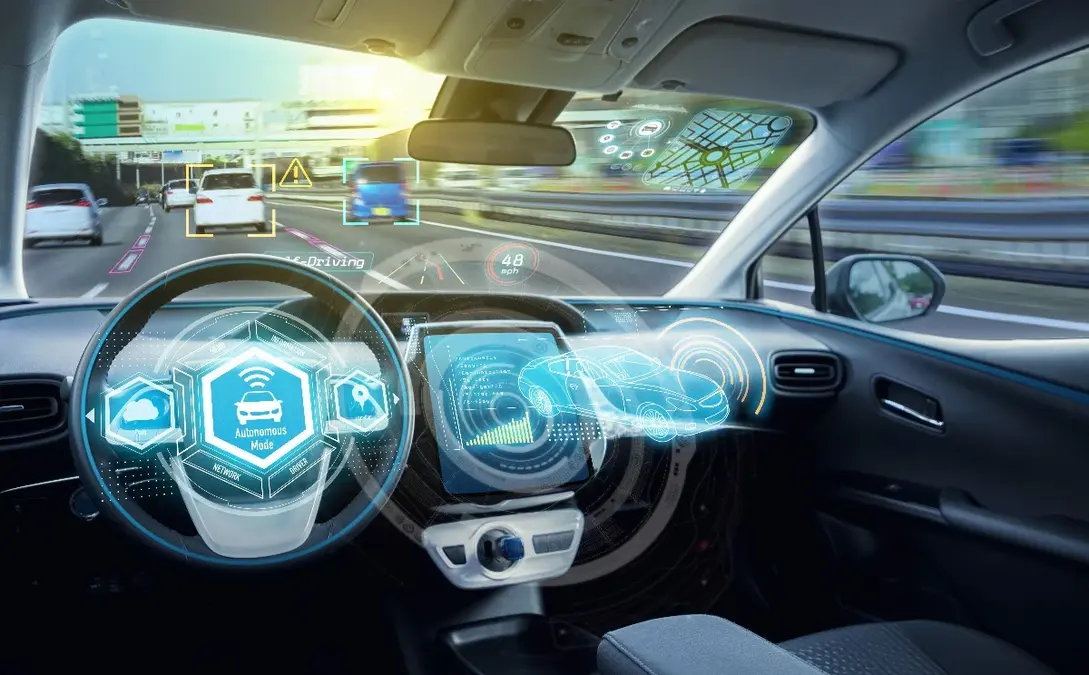
In 2026, cars have evolved into intelligent machines powered by AI, transforming driving from a manual task into a smart, data-driven experience. These vehicles use advanced technologies like machine learning, computer vision, and real-time processing to improve safety, efficiency, and overall performance. AI-driven driver assistance systems act as co-pilots, reducing human error and making everyday commutes smoother and safer. As innovation continues, intelligent cars are becoming the new standard, shaping a future of autonomous, personalized, and highly connected transportation.
The car you drive in 2026 is officially smarter than the top-tier computer that sat on your desk just a decade ago. We have moved past the era of simple mechanical transportation; today, artificial intelligence is no longer a futuristic concept—it is a standard feature sitting in millions of driveways across the USA and beyond.
From the congested streets of Manhattan to the wide-open Interstates, AI is reshaping safety, performance, and the very nature of the commute. This guide breaks down the core components of this automotive revolution and explains why “intelligent cars” are the new industry baseline.
1. What Is AI in Cars?
AI in cars refers to the integration of complex algorithms, machine learning, and sensor data to allow a vehicle to perceive, think, and act. It goes far beyond voice-activated GPS or basic cruise control.
The Core Pillars of Automotive AI:
Machine Learning Systems: Algorithms that “learn” from millions of miles of driving data to predict traffic patterns and pedestrian behavior.
Computer Vision: High-speed processing of visual data from cameras to identify road signs, lane markings, and obstacles.
Real-time Data Processing: The ability of the car’s “brain” to make split-second decisions—like emergency braking—faster than a human nervous system.
While traditional automation follows “if-then” rules, automotive AI adapts to new, unseen scenarios, making every trip safer than the last.
2. Why AI in Cars Matters in 2026
The acceleration of competition between legacy automakers (Ford, GM), tech titans (Google, Apple), and EV startups (Tesla, Rivian) has turned the car into the ultimate mobile device.
Reducing Human Error: Since 90% of accidents are caused by human error, AI’s role in fatigue detection and collision avoidance is saving lives daily.
Efficiency for Commuters: In dense urban areas like New York, AI optimizes stop-and-go battery usage in EVs and finds the most energy-efficient routes, directly impacting your wallet and the environment.
Driver Confidence: Features like automated lane-change and stress-sensing cabin environments are turning high-pressure driving into a relaxed experience.
3. Defining the Role of AI Driver Assistance
AI driver assistance is the bridge between traditional driving and full autonomy. It is categorized by “Levels” established by the SAE:
| Level | Name | Description |
| Level 2 | Partial Automation | The car controls steering and speed, but the driver must remain engaged (e.g., Tesla Autopilot). |
| Level 3 | Conditional Automation | The car drives itself under specific conditions (highway traffic), allowing the driver to look away temporarily. |
| Level 4 | High Automation | The car can handle most driving tasks without human intervention in “geofenced” areas (e.g., Waymo in Phoenix/NYC). |
Modern intelligent cars act as a “co-pilot,” using proactive collision avoidance and adaptive speed control to mitigate risks before the driver even notices them.
4. The Sensory Intelligence of Smart Vehicles
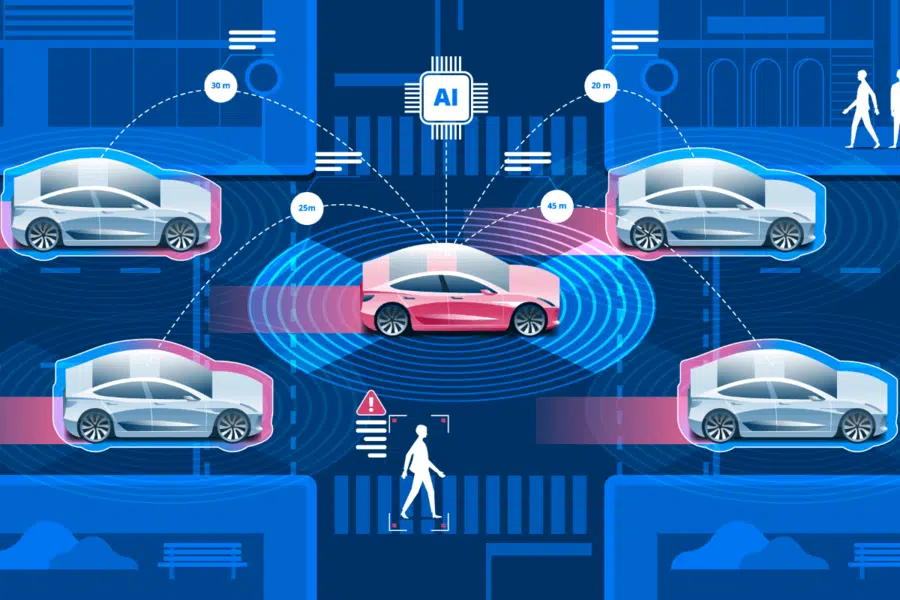
A smart vehicle sees the world through a suite of high-tech “eyes” that never blink.
LiDAR & Radar: Using light and radio waves to create a 3D map of the surroundings, even in pitch-black darkness or heavy rain.
Ultrasonic Sensors: Handling the “close-quarters” work like precision parking.
Sensor Fusion: This is the secret sauce—taking data from all these sources and creating one unified, reliable picture of the road.
5. Platform-Specific AI Strategies
Not all AI in cars is created equal. Different brands focus on different “personalities”:
Tesla: Focuses on a vision-only (camera) approach to achieve mass-market autonomy.
Waymo/Zoox: Uses expensive, high-precision LiDAR to dominate the urban robotaxi market.
GM/Ford: Integrates conversational AI into the cabin, making the car a voice-first assistant that manages your calendar and home smart devices while you drive.
6. Establishing Safety Standards and Guidelines
As automotive AI takes the wheel, safety guidelines are the new “seatbelts” of the industry. These standards must include:
Fail-Safe Protocols: What happens if a sensor fails at 70 mph?
Human Override Requirements: Ensuring the driver can always retake control instantly.
Data Privacy: Protecting the massive amounts of personal data intelligent cars collect about your locations and habits.
7. Common Mistakes to Avoid
Overpromising Autonomy: Calling a system “Full Self-Driving” when it still requires human supervision can lead to dangerous complacency.
Ignoring Urban Diversity: An AI trained in sunny California may struggle with the chaotic, snow-covered streets of Upstate New York.
Interface Overload: Cluttering the dashboard with too many AI alerts can distract a driver rather than help them.
8. Future Trends: 2026 and Beyond
Adaptive Learning: Your car will soon learn your specific driving style—knowing exactly how much “cushion” you like between vehicles.
Minimalist Interfaces: Physical buttons are being replaced by high-accuracy voice and gesture controls.
Predictive Maintenance: AI will analyze engine vibrations and battery health to tell you a part is going to fail before it actually breaks.
Conclusion
AI in cars is transforming driving from a chore into a seamless, intelligent service. Whether you are a daily commuter, a tech enthusiast, or an automotive brand, understanding this shift is essential. The future of transportation isn’t just about moving from point A to point B; it’s about the intelligence that guides you there safely.
At Turboocruiser.com, we are dedicated to helping brands and drivers navigate this high-speed evolution. The road ahead is smart—are you ready to drive it?
FAQs
Q1: What is AI in cars and how does it work for everyday drivers?
AI in cars uses sensors and software to help with steering, braking, and parking. For everyday drivers, it manifests as “active safety” features that prevent accidents before they happen.
Q2: How is automotive AI making roads safer in 2026?
By eliminating distractions and slow human reaction times. Features like automatic emergency braking and blind-spot intervention are now standard, significantly lowering collision rates in the USA.
Q3: What are the best examples of AI driver assistance?
Leading examples include GM’s Super Cruise, Ford’s BlueCruise, and Tesla’s Autopilot, all of which allow for varying degrees of hands-free driving on pre-mapped highways.
Q4: What makes a car a truly “smart vehicle”?
A smart vehicle is one that can update its own software over the air, communicate with other cars (V2V), and use AI to proactively manage its own maintenance and safety.
Q5: How will AI in cars evolve over the next five years?
Expect a shift toward “Level 4” autonomy in major cities and cars that act as personalized digital assistants, fully integrated with your smartphone and smart home ecosystems.