
BMW has built its reputation around a simple idea: a car should be enjoyable to drive, even when it is designed for everyday life. But once you start looking through the BMW lineup, that simplicity disappears quickly. There are BMW 2 Series, 3 Series, 4 Series, 5 Series, 7 Series and 8 Series models. Then there are the X SUVs, electric BMW i models, high-performance M cars and the Z4 roadster.
So what does each BMW series actually mean? The answer isn’t simply that a higher number means a better car. Each series has its own character, body styles, size, purpose and place within BMW’s lineup. Here is a straightforward guide to the major BMW series and what separates them.
1. BMW 2 Series: The Compact Entry Into BMW Performance
The BMW Series occupies the compact end of BMW’s traditional car lineup. It is designed for drivers who want a relatively small BMW without moving into the larger dimensions of the 3 Series and above. Depending on the body style and market, the 2 Series can offer a very different experience. The lineup has included compact coupes and other body configurations, while the high-performance M2 takes the formula much further.
The M2 is particularly important because it turns the compact BMW concept into a serious performance car.
Think of the 2 Series as: compact, sporty and more focused on maneuverability than outright luxury.
2. BMW 3 Series: The Classic BMW Sport Sedan
If one BMW series represents the company’s sport-sedan identity, it is the 3 Series. The 3 Series has long occupied the space between compact practicality and executive-car comfort. It is available in different powertrain and specification configurations, depending on market and model year, and it remains one of BMW’s best-known nameplates.
The appeal is the balance. A 3 Series can be practical enough for everyday driving while retaining the driving-focused character associated with BMW. That balance is also why the 3 Series provides the foundation for performance variants such as the BMW M3.
Think of the 3 Series as: the all-round BMW sedan.
3. BMW 4 Series: The More Dramatic Alternative
The BMW 4 Series shares engineering roots with the 3 Series but takes a different approach to design and positioning. The series is associated with body styles such as the Coupe and Convertible, while the 4 Series Gran Coupe provides a more practical interpretation of the concept. The result is a BMW aimed at buyers who want some of the practicality associated with a sedan without giving up the more dramatic proportions of the 4 Series family. The performance side of the range leads toward the BMW M4, one of BMW M’s best-known performance cars.
Think of the 4 Series as: the style-focused counterpart to the 3 Series.
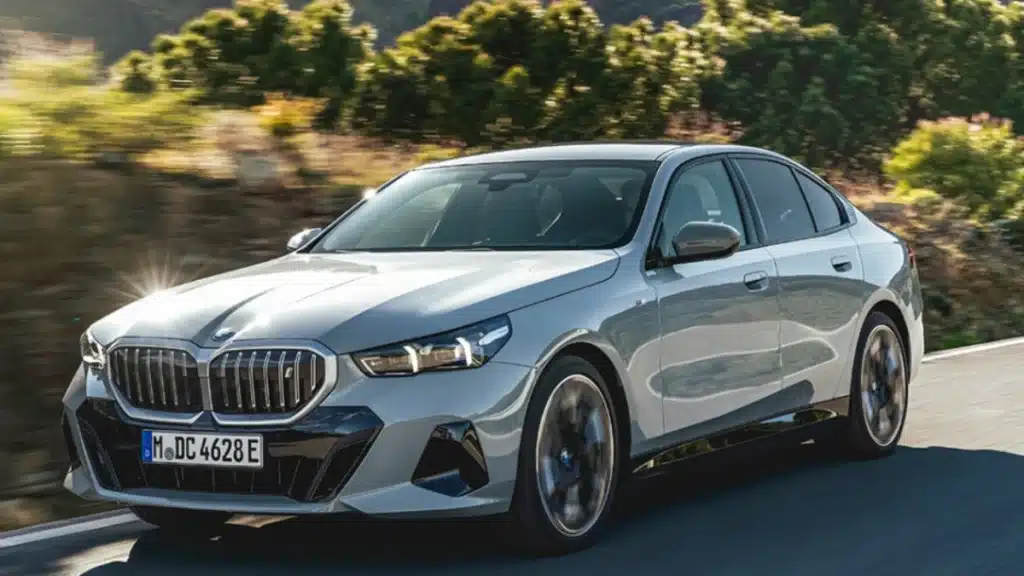
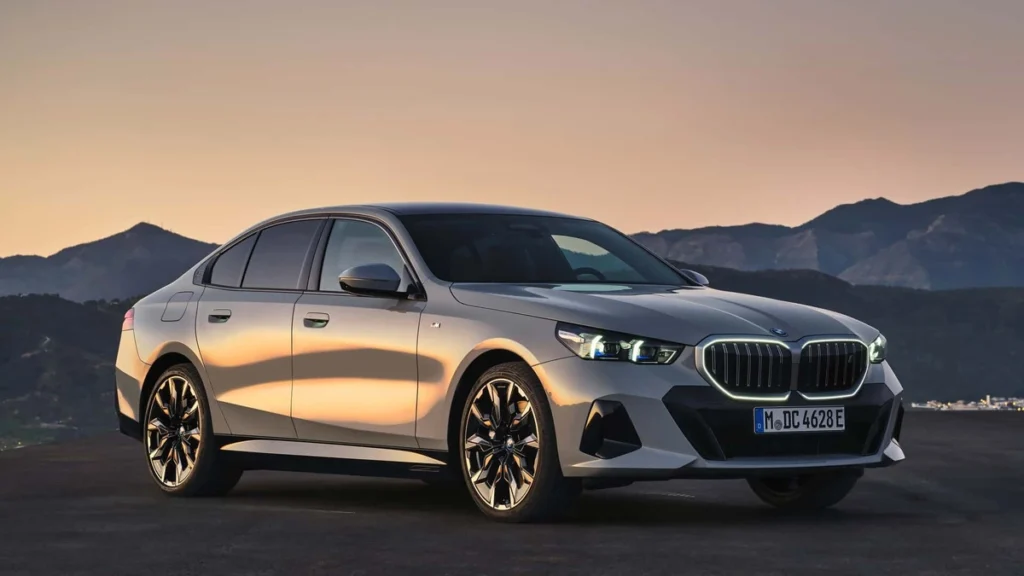
4. BMW 5 Series: The Executive All-Rounder
The BMW 5 Series moves the lineup into a larger executive-car category. This is where BMW combines driving dynamics with a greater emphasis on long-distance comfort, technology and interior refinement. The 5 Series is larger than the 3 Series and is positioned for buyers who want more space and a more substantial luxury-car experience. The range also includes the BMW i5, the fully electric counterpart to the 5 Series sedan. BMW describes the i5 as its all-electric business sedan. For drivers who want performance, the BMW M5 takes the 5 Series formula into BMW M territory.
Think of the 5 Series as: a sophisticated executive sedan that still remembers it is a BMW.
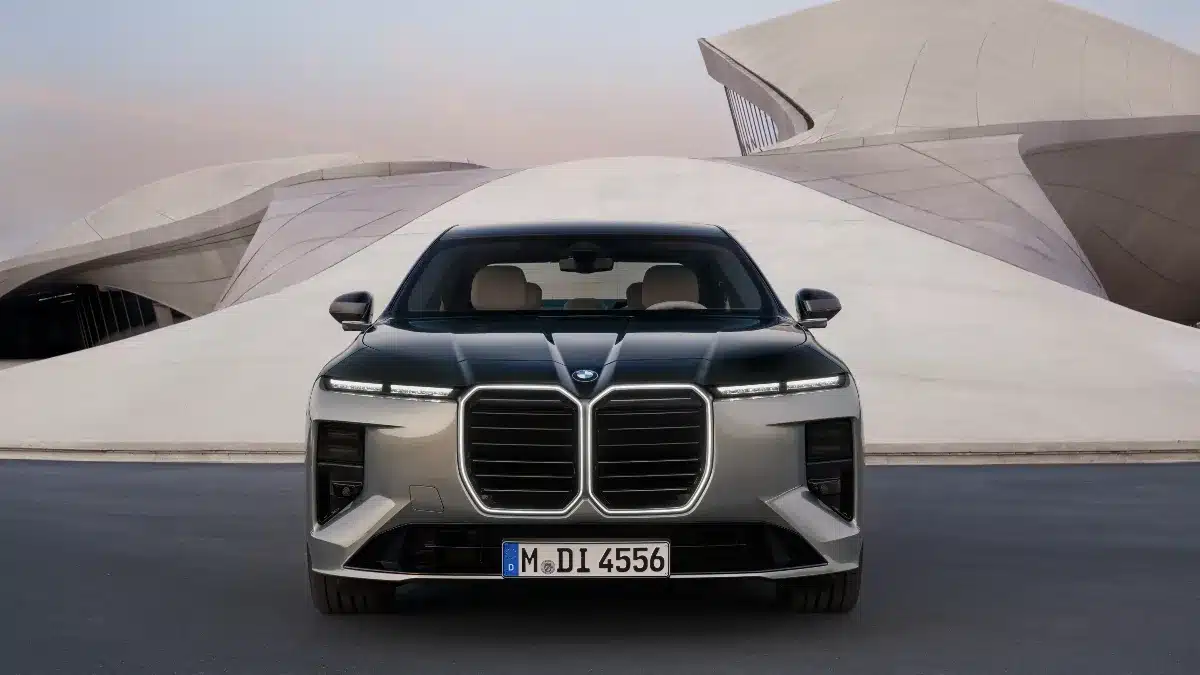
5. BMW 7 Series: BMW’s Flagship Sedan
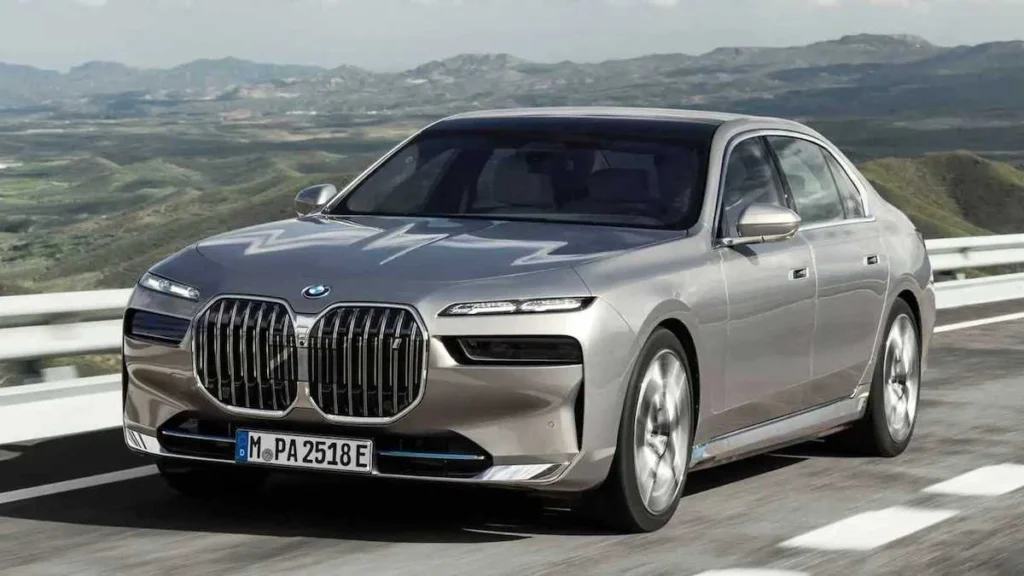
At the top of BMW’s traditional sedan hierarchy sits the 7 Series. This is where the emphasis shifts toward flagship-level luxury, technology and rear-seat comfort. The 7 Series is designed for customers who want a large luxury sedan capable of competing in the highest levels of the premium market. There is also an electric interpretation in the form of the BMW i7. BMW describes the i7 as its all-electric luxury sedan, combining electric performance with a strong focus on technology and passenger comfort. Inside, the i7 can be configured with features such as a large rear Theatre Screen, premium materials and advanced cabin technology.
Think of the 7 Series as: BMW’s flagship luxury sedan.
6. BMW 8 Series: The Grand-Touring Side of BMW
The BMW 8 Series occupies a different space from the 7 Series. Rather than concentrating primarily on executive-sedan luxury, the 8 Series brings together long-distance comfort, performance and a more dramatic grand-touring character. Depending on configuration and market, the family has included Coupe, Convertible and Gran Coupe models. It sits high in BMW’s conventional luxury lineup and is aimed at drivers who want a more emotional alternative to a traditional luxury sedan.
Think of the 8 Series as: BMW’s grand-tourer with a strong performance identity.
7. BMW X Series: Where BMW Meets the SUV
The BMW X family covers the company’s Sports Activity Vehicles and Sports Activity Coupes. This is where the lineup becomes considerably broader.
Current BMW offerings include models such as the:
- X1
- X2
- X3
- X5
- X6
- X7
- XM
BMW’s current model pages place these vehicles across different sizes and purposes, from compact SUVs to large luxury and performance-focused models. The X1 is positioned toward the compact end. The X3 sits in the middle of the range. The X5 moves into a larger luxury SUV category. The X7 provides three-row capability and flagship SUV presence. Then there is the X6, which brings a more coupe-like roofline to the SUV concept. And at the performance extreme sits the XM, BMW’s dedicated high-performance electrified SUV.
Think of the X family as: BMW’s SUV universe.
8. BMW Z4: The Two-Seat Roadster
The BMW Z4 doesn’t fit neatly into the numbered series. It is a dedicated two-seat roadster designed around open-air driving. The current BMW lineup includes the Z4 sDrive30i and Z4 M40i in the U.S. market. Unlike a 3 Series or 5 Series, practicality isn’t the central argument here. The Z4 exists primarily for the experience of driving a compact, rear-wheel-drive-oriented sports roadster.
Think of the Z4 as: BMW’s traditional open-top sports car.
9. BMW i: The Electric Side of the Family
The BMW i name identifies BMW’s electric-focused models.
The current family includes vehicles such as:
- BMW i4
- BMW i5
- BMW i7
- BMW iX
- BMW iX3, depending on market and model availability
BMW describes the i4 as its first all-electric Gran Coupe, while the i5 brings electric power to its business-sedan formula and the i7 takes the concept into flagship luxury. This is an important part of understanding modern BMW. Electric BMWs don’t necessarily abandon the brand’s established model hierarchy. Instead, BMW increasingly offers electric alternatives that occupy familiar positions within the lineup.
For example:
3 Series → traditional sport sedan
i4 → electric Gran Coupe
5 Series → executive sedan
i5 → electric executive sedan
7 Series → flagship luxury sedan
i7 → electric flagship
That makes the i range easier to understand once you stop treating the “i” as a completely separate BMW universe.
10. BMW M: Where Performance Becomes the Priority
Then there is BMW M. The M name originally grew from BMW’s motorsport activities, but today it identifies some of the company’s most performance-focused road cars. The current BMW M lineup includes models such as the M2, M3, M4, M5 and high-performance X models. BMW’s 2026 U.S. documentation lists the M2, M3, M4, M5, X5 M Competition and X6 M Competition among its M models. BMW M cars typically receive significant changes beyond a more powerful engine.
Depending on the model, that can involve:
- Chassis tuning
- Braking systems
- Cooling
- Aerodynamics
- Suspension
- Steering
- Drivetrain
- Performance electronics
That is why an M car shouldn’t simply be viewed as a BMW with more horsepower. It is generally engineered around a different performance objective.
Think of BMW M as: the high-performance branch of the BMW family.
How BMW’s Numbering System Works
BMW’s numbering can initially look complicated, but there is a basic pattern. The traditional numbered sedan and coupe families generally move upward through the lineup:
2 Series → 3 Series → 4 Series → 5 Series → 7 Series → 8 Series
However, the numbers shouldn’t be interpreted as a simple ranking system. A 4 Series isn’t simply a “better” 3 Series. A 7 Series isn’t designed to replace an 8 Series. Each occupies a different position based on body style, luxury, size, performance and intended use. The same idea applies to BMW’s X models.
What Does the “i” Mean on a BMW?
The BMW i name is associated with electric vehicles. Modern examples include the i4, i5, i7 and iX. BMW’s official i-series material identifies the i4 as an all-electric Gran Coupe, the i5 as an all-electric business sedan and the i7 as an all-electric luxury sedan. The naming therefore helps identify the vehicle’s electric position within the wider BMW range.
What Does “M” Mean on a BMW?
The M designation identifies BMW’s performance division and high-performance vehicles. But there is an important distinction between a full BMW M model and an M Sport package. An M Sport-equipped BMW can have sportier styling, trim and chassis equipment without being a full M car. A genuine M model goes considerably further into performance engineering. That distinction is important when comparing BMW models and prices.
BMW Series at a Glance
| BMW family | Main idea |
| 2 Series | Compact BMW cars and performance models |
| 3 Series | Sport sedan and everyday BMW |
| 4 Series | Coupe, Convertible and Gran Coupe character |
| 5 Series | Executive sedan and touring-oriented luxury |
| 7 Series | Flagship luxury sedan |
| 8 Series | Grand touring and high-end performance |
| X Series | SUVs and Sports Activity Vehicles |
| Z4 | Two-seat roadster |
| BMW i | Electric BMW models |
| BMW M | High-performance BMW models |
Which BMW Series Is the Largest?
Among BMW’s traditional numbered sedans, the 7 Series represents the flagship luxury sedan position. Within the SUV family, the X7 occupies the large three-row luxury SUV space. These aren’t direct competitors to each other, however. The 7 Series is a luxury sedan, while the X7 is an SUV designed around a different body style and use case.
Which BMW Series Is the Sportiest?
There isn’t one answer because BMW offers different kinds of performance cars. The M2 delivers a compact performance-car formula. The M3 and M4 bring BMW M performance to the 3 and 4 Series families. The M5 takes that philosophy into the executive sedan segment. And BMW also produces high-performance SUVs such as the X5 M Competition and X6 M Competition. So the more useful question is not simply which BMW is “sportiest.” It is which kind of performance BMW fits the driver.
Final Thoughts
The BMW lineup makes more sense once you stop thinking of the numbers as a simple ladder.
The 2 Series brings BMW’s formula into a compact space.
The 3 Series represents the classic sport sedan.
The 4 Series adds more dramatic body styles.
The 5 Series moves into executive luxury.
The 7 Series becomes the flagship.
The 8 Series takes BMW toward grand touring.
The X family brings those ideas into SUVs.
The i models push BMW’s electric strategy forward.
And BMW M turns the performance dial much further.
That gives BMW one of the broadest model families in the premium automotive market—and it also gives us a strong foundation for exploring each model individually.
BMW Series: Frequently Asked Questions
What are the main BMW Series?
BMW’s numbered car families include the 2, 3, 4, 5, 7 and 8 Series, while the wider lineup also includes X SUVs, the Z4 roadster, BMW i electric models and BMW M performance vehicles. Exact availability varies by market and model year.
Is the BMW 3 Series better than the 5 Series?
They are designed for different purposes. The 3 Series is smaller and more focused on the compact sport-sedan segment, while the 5 Series provides a larger executive-car experience.
What is the difference between BMW 3 Series and 4 Series?
The 3 Series is primarily associated with BMW’s sport-sedan formula, while the 4 Series emphasizes coupe, convertible and Gran Coupe body styles and a more design-focused character.
What is the most luxurious BMW Series?
The 7 Series occupies BMW’s flagship luxury-sedan position, while the X7 serves as the large luxury SUV counterpart.
What is the BMW Series?
BMW i identifies BMW’s electric-focused models, including vehicles such as the i4, i5, i7 and iX.
What does BMW M mean?
BMW M identifies the brand’s high-performance models and performance division. Current M vehicles include models such as the M2, M3, M4, M5 and high-performance X models.