
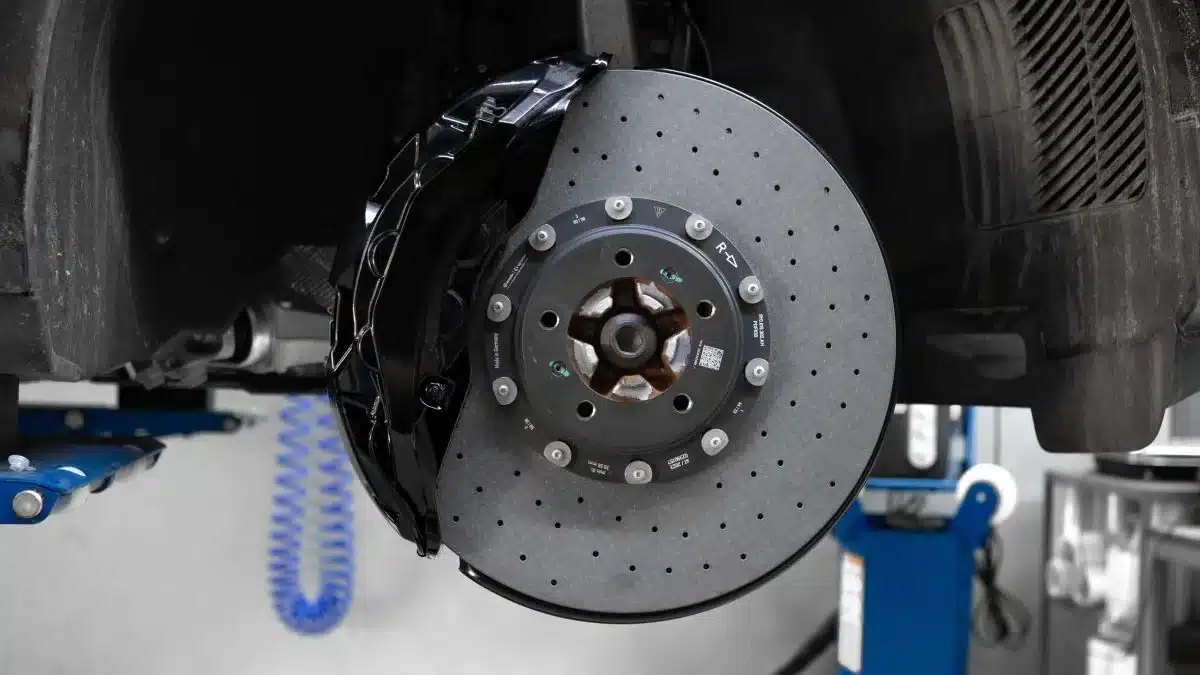
The high price of superior stopping power causes a polarizing debate. When configuring a high-performance sports car, supercar, or track-focused SUV, checking the box for premium brakes adds anywhere from $8,500 to over $15,000 to the window sticker. This massive cost leaves many driving enthusiasts asking if carbon ceramic brakes are worth it.
Automotive marketing promises race-bred stopping distances and eternal durability, but the reality depends entirely on how the vehicle is used. This guide breaks down exactly what you get for that massive financial outlay, how the technology handles real-world abuse, and whether you should save your cash or tick the box for the ultimate braking system.Carbon Ceramic Brakes Worth It
Understanding the Technology: What are CCM Brakes?
To understand the immense price tag, it helps to explore what ccm brakes (Carbon Ceramic Material) actually are. Traditional brake systems rely on heavy cast-iron or steel discs, and understanding signs your turbo needs replacement follows a similar logic — high-performance components under extreme heat and stress wear differently than standard parts. These steel rotors are clamped by hydraulic brake calipers containing organic, metallic, or semi-metallic friction pads.

The alternative system swaps out the heavy iron for a complex composite mixture of silicon carbide and carbon fiber. Creating a single composite rotor is an incredibly slow, energy-intensive manufacturing process that takes up to several weeks.
The raw materials are molded under immense heat and thousands of pounds of pressure. This bakes the mixture into a super-hard crystalline structure. This slow creation cycle is the primary driver behind the astronomical carbon ceramic brake cost.
Ceramic vs Steel Brakes: The Real-World Performance Differences
The choice between ceramic vs steel brakes comes down to balancing mechanical trade-offs. Neither system is universally superior in every driving scenario.
Thermal Capacity and Brake Fade
The single biggest technical advantage of a carbon composite setup is its ability to handle mind-boggling heat. When you slow a heavy performance car down from triple-digit speeds, kinetic energy transforms into friction heat.
Traditional steel rotors act like a thermal sponge. Under repeated heavy braking on a racetrack, iron discs eventually saturate with heat. They can no longer dissipate it quickly enough, which causes the brake fluid to boil and the pads to glaze over. This results in a terrifying phenomenon known as brake fade, where the pedal goes soft and the car refuses to slow down.
Composite rotors handle operating temperatures exceeding 700 degrees Celsius without breaking a sweat. Instead of fading, composite materials often bite harder as they get hotter, providing relentless, repeatable stopping power lap after lap.
Unsprung Mass and Handling Dynamics
Beyond managing high temperatures, composite rotors provide a massive handling benefit by shaving weight directly from the vehicle chassis. Because carbon-silicon carbide is significantly less dense than cast iron, a composite rotor is roughly 50 percent lighter than an equivalent steel disc.
This reduction removes up to 40 pounds of unsprung weight from the car’s suspension corners. Shaving unsprung mass allows the dampers and springs to react much quicker to bumps, improving steering response, mechanical grip, and overall ride comfort.
Cold Bite and Daily Usability
Despite their track supremacy, high-end composites have a notable weakness in everyday commuting scenarios because they require heat to work optimally. On a cold morning or during a long highway drive in the rain, the first initial press of the brake pedal can feel surprisingly numb.
Traditional steel setups offer immediate, aggressive friction response right from freezing temperatures. Additionally, composite systems are famous for emitting loud, high-pitched squeals during low-speed street driving, which can be annoying when pulling up to a stoplight.

Decoding the Ledger: Carbon Ceramic Brake Cost Breakdown
The financial commitment does not stop at the dealership window sticker. If you’re budgeting for a performance build overall, our breakdown of how much it costs to maintain a performance vehicle is a useful companion resource before committing to a ceramic upgrade. While the factory option generally adds between $8,000 and $11,000 to a new vehicle purchase, replacing worn or damaged components down the road introduces serious sticker shock.
Unlike iron rotors, composite discs cannot be machined or resurfaced on a brake lathe when they develop grooving or wear. Once a rotor drops below a specific minimum weight or exhibits surface oxidation from track use, the entire unit must be thrown away.
The table below outlines real-world estimated parts and labor expenditures for standard steel versus high-end composite systems across popular performance platforms based on current market data.
| Brake Component / Service | High-Performance Steel System | Premium Carbon-Ceramic System |
| New Car Factory Option Cost | Included as Standard | $8,500 – $11,000 |
| Single Replacement Rotor | $150 – $450 | $3,000 – $5,500 |
| Replacement Pads (Per Axle) | $150 – $350 | $600 – $1,100 |
| Full 4-Corner Overhaul (Parts + Labor) | $1,200 – $2,800 | $15,000 – $26,000+ |
| Average Lifespan (Street Use) | 30,000 – 45,000 Miles | 100,000+ Miles |
| Average Lifespan (Aggressive Track Use) | 3 – 6 Track Weekends | 12 – 20 Track Weekends |
Are Ceramic Brakes Worth It? Evaluating Your Driving Profile
Determining whether performance brakes made of composite materials are worth the massive financial premium requires an honest look at how you plan to use the vehicle. Before deciding, it also helps to review your performance vehicle maintenance budget as a whole brake choice is just one piece of your total ownership cost.
The Commuter and Weekend Cruiser
If your performance car spends its life driving on public roads, tackling twisty canyons, and commuting to cars-and-coffee events, the extra cost is rarely worth it from a pure performance standpoint. Modern factory steel setups are exceptionally good. They provide immediate bite and more than enough stopping power to trigger the anti-lock braking system on public asphalt.
The only major benefit for street drivers is the complete absence of dark metallic brake dust. Composite pads produce a light, non-stick gray residue. This keeps expensive multi-spoke wheels clean for weeks. However, paying a $10,000 premium simply to avoid washing your wheels is a tough pill to swallow.
The Dedicated Track Enthusiast
For drivers who frequently participate in high-speed open track days or time attack events, the equation gets complicated. If you drive a very heavy, high-horsepower vehicle like a Porsche 911 Turbo, BMW M4, or Corvette Z06, iron brakes can degrade rapidly under track heat.
The fade-free performance of a composite setup offers massive confidence when braking at the absolute limit into a corner. However, you must budget for eventual replacement expenses. If you track your car heavily, you will eventually burn through the rotors. This results in a massive repair bill that can quickly drain a racing budget.
Because of this, many hardcore track drivers actually remove their factory composite rotors when the car is brand new. Similar to how enthusiasts approach supercar modifications, they store the ceramics safely in boxes and bolt on a cheaper aftermarket steel big brake kit for track duty. This preserves the expensive ceramics for when they eventually sell the car.

Conclusion
At the end of the day, advanced composite stopping power represents a pinnacle achievement in high-performance automotive engineering. They deliver unbeatable thermal management, immense fade resistance, a major reduction in unsprung suspension weight, and completely clean wheels.
However, for the vast majority of sports car owners who keep their driving limited to public roads and occasional canyon runs, the initial investment and eye-watering replacement expenses outweigh the performance benefits. Unless you are chasing down lap times on a racetrack or prioritizing a completely dust-free wheel presentation, standard iron setups provide far better value per dollar.
For more deep dives into supercar maintenance realities, high-performance track setups, and luxury automotive engineering trends, make sure to explore our latest technical guides at Turboocruiser.
Frequently Asked Questions
Why do carbon ceramic brakes squeak so much during daily driving?
The squeaking sound is caused by low operating temperatures and a lack of pad transfer layer on the rotor face. Because these systems are designed to operate at race-track temperatures, light use around town causes micro-vibrations between the pad and the hard composite surface, creating a high-pitched squeal.
Can a chipped carbon ceramic rotor be repaired?
No, any physical damage, such as a chip along the outer edge caused by a careless technician changing a wheel, ruins the structural integrity of the disc. A chipped rotor cannot be filled or patched and must be completely replaced to prevent catastrophic failure under high thermal load.
Do carbon ceramic brakes stop a car in a shorter distance?ade
In a single emergency stop from 60 miles per hour, a car with composite brakes will stop in virtually the same distance as an identical car with steel brakes. This is because a single stop is limited by tire traction, not brake friction. The composite system only stops shorter during repeated high-speed decelerations where steel brakes would suffer from thermal fade.
How can you tell when composite rotors are worn out?
Unlike steel rotors that get thinner as they wear, composite rotors wear out from the inside out via carbon oxidization caused by extreme heat. To check their health, technicians must remove the rotor from the car, clean it completely, and weigh it on a highly precise digital scale to see if the physical mass has dropped below the minimum allowed weight stamped on the center hat.