
Electric ships are transforming the maritime industry by replacing traditional fuel engines with cleaner, battery-powered and hybrid propulsion systems. These innovations reduce emissions, lower operating costs, and improve efficiency while supporting global sustainability goals. Despite challenges like battery limits and infrastructure gaps, adoption is rapidly growing worldwide. The future points toward advanced technologies like solid-state batteries and hydrogen fuel cells for fully zero-emission shipping.
The global maritime industry is currently navigating its most significant transformation since the shift from sail to steam. As the push toward cleaner transport intensifies, the environmental impact of traditional heavy fuel oils—ranging from massive carbon emissions to sulfur pollution—has come under intense scrutiny. Enter the era of electric ships: a modern, high-tech solution designed to decarbonize our oceans.
In this guide, we will explore the mechanics of battery powered ships, the versatility of hybrid marine propulsion, and how these innovations are steering the world toward a fleet of zero emission vessels.
What Are Electric Ships?
At their core, electric ships are vessels that use electricity as their primary source of power for propulsion and onboard systems. Unlike traditional ships that rely on internal combustion engines burning diesel or heavy fuel oil, these modern vessels utilize stored energy to drive electric motors.
Types of Electric Vessels
Fully Electric Ships: These are true zero emission vessels that rely entirely on large-scale battery banks. They are most effective for short-distance routes, such as harbor ferries and inland river transport.
Hybrid Systems: These vessels combine traditional engines with electric power, allowing for flexibility during high-load operations or long-distance voyaging.
How Electric Ship Technology Works
Building a battery powered ship requires more than just a large version of an EV battery. The architecture is a complex integration of heavy-duty hardware and smart software.
Core Components
Battery Systems: High-density Lithium-ion or Solid-state battery racks designed to withstand the corrosive marine environment.
Electric Motors: These convert electrical energy into mechanical thrust with much higher efficiency than combustion engines.
Power Management Systems (PMS): The “brain” of the ship that balances energy distribution between propulsion, lighting, and navigation.
Charging Methods
To stay operational, these ships utilize Shore Power (plugging into the grid while docked) or integrate renewable sources like solar panels and wind-assist sails to trickle-charge the batteries while at sea.
What Is Hybrid Marine Propulsion?
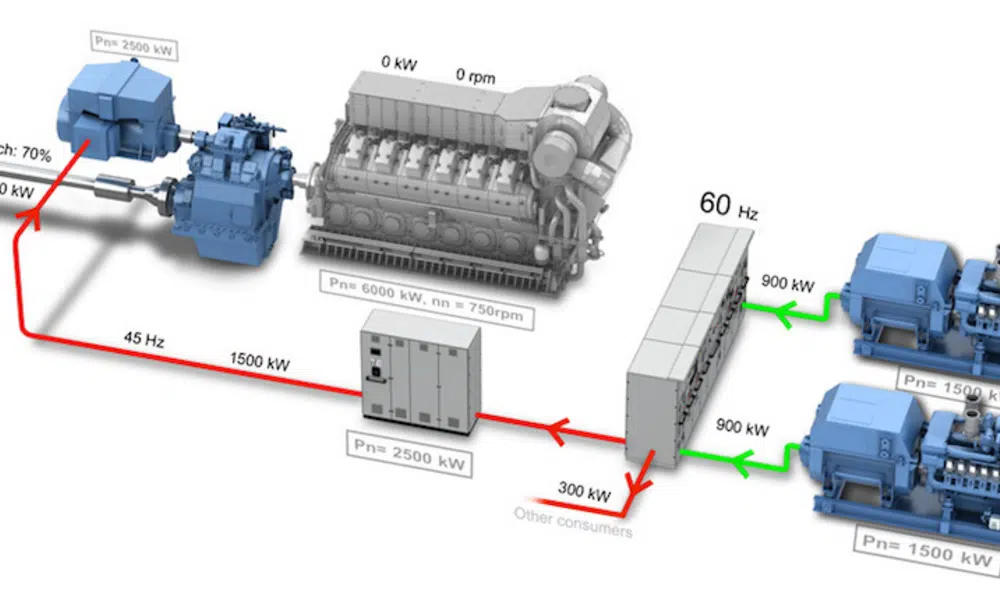
For long-haul shipping where battery capacity isn’t yet sufficient, hybrid marine propulsion offers a middle ground. This technology allows a ship to switch between fuel and electricity depending on the need.
Hybrid Setup Types
| Type | How It Works |
| Series Hybrid | The engine acts solely as a generator to charge batteries; only the electric motor turns the propeller. |
| Parallel Hybrid | Both the engine and the electric motor are connected to the propeller shaft and can work together. |
| Plug-in Hybrid | Similar to hybrid cars, these can be charged at the dock to maximize electric-only range. |
Benefits of Electric and Hybrid Ships
The transition to zero emission vessels isn’t just about “being green”—it’s about smarter economics and better engineering.
Environmental Impact: Massive reduction in $CO_2$, $NO_x$, and $SO_x$ emissions.
Cost Savings: While the initial cost is high, electricity is often cheaper than marine fuel, and electric motors have fewer moving parts, leading to lower maintenance costs.
Noise Reduction: Electric motors are nearly silent, which is vital for protecting sensitive marine ecosystems and improving passenger comfort.
Operational Efficiency: Electric propulsion provides instant torque and better maneuverability in tight harbors.
Challenges and Limitations
Despite the momentum, the industry faces significant headwinds:
Battery Density: Batteries are heavy and take up significant space compared to liquid fuel.
Infrastructure: Many global ports lack the high-voltage charging stations required to “refuel” a massive cargo ship quickly.
Range Constraints: Currently, fully electric power is limited to short-sea shipping and ferries.
Initial Investment: The “CapEx” for an electric ship is significantly higher than a traditional vessel.
Real-World Examples and Adoption
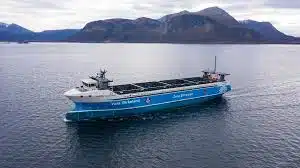
Norway is currently leading the charge, operating the world’s first fully electric autonomous cargo ship, the Yara Birkeland. Across the globe, we are seeing:
Electric Ferries: Hundreds of short-distance ferries in Scandinavia and Asia have already made the switch.
Electric Tugboats: Major ports are adopting electric tugs for high-torque, low-distance harbor work.
The Future of Zero Emission Vessels
By 2026 and beyond, we expect to see rapid innovations in Solid-state batteries and the integration of Hydrogen Fuel Cells to extend the range of electric ships. Government regulations, such as the IMO’s goals for reducing greenhouse gas emissions, are making the transition mandatory rather than optional.
Electric Ships vs. Traditional Ships
| Feature | Traditional Ship | Electric Ship |
| Fuel Usage | Diesel / Heavy Fuel Oil | Electricity / Batteries |
| Emissions | High $CO_2$ & Pollutants | Zero (at point of use) |
| Noise Level | High / Constant Vibration | Near Silent |
| Maintenance | Frequent / Complex | Low / Simplified |
Conclusion
The transition to electric shipping is no longer a distant dream—it is a live industrial transformation. By moving toward zero emission vessels, the maritime world is not only protecting our oceans but also future-proofing the global supply chain against rising fuel costs and tightening regulations.
At turboocruiser.com, we believe the future of cruising and shipping is silent, clean, and powered by the grid. The horizon for electric vessels is bright, and the journey toward a sustainable blue economy has only just begun.
FAQ Section
1. What are electric ships?
Electric ships are vessels that use electric motors for propulsion, powered by onboard batteries or hybrid generators rather than traditional fuel-burning engines.
2. How do battery powered ships work?
They work by storing electricity in large battery banks and discharging that energy through a power management system to high-torque electric motors that turn the propellers.
3. What is hybrid marine propulsion?
It is a system that combines a traditional internal combustion engine with an electric propulsion system, allowing the ship to optimize fuel use and reduce emissions.
4. Are electric ships truly zero emission vessels?
Fully electric ships produce zero emissions at the point of use. Their total environmental impact depends on whether the electricity used to charge them comes from renewable sources like wind or solar.
5. What is the future of electric ships?
The future lies in improved battery density, hydrogen fuel cell integration, and autonomous technology, eventually allowing even large transoceanic cargo ships to operate with minimal environmental impact.
Pingback: Speed Boat 2026: Fastest Models, Prices & Features Guide